
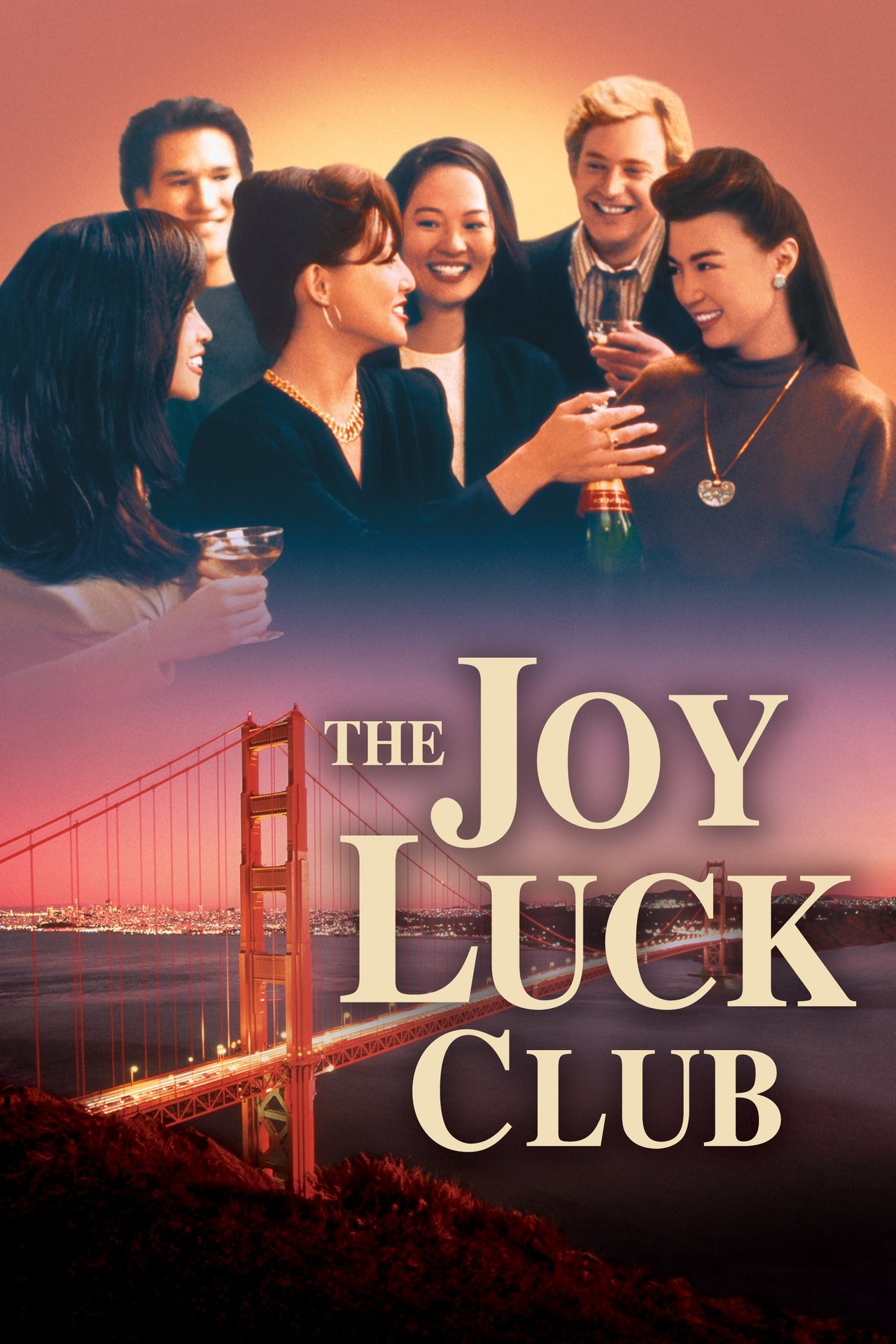
Will The Joy Luck Club make you cry?
Very sad, and it does not wait for the ending. The Joy Luck Club tells eight linked stories, those of four Chinese-born mothers and their four American-born daughters, and nearly every one has a scene built to make you cry. The frame is a farewell party in San Francisco for June, whose mother has died and who is about to leave for China.
Read the full write-up on The Joy Luck Club💧
No stories yet
Be the first to share how this movie made you feel.
How sad is The Joy Luck Club and will it make you cry?
Very sad, and it does not wait for the ending. The Joy Luck Club tells eight linked stories, those of four Chinese-born mothers and their four American-born daughters, and nearly every one has a scene built to make you cry. The frame is a farewell party in San Francisco for June, whose mother has died and who is about to leave for China.
From there the film keeps slipping back into the mothers' youth in China and the daughters' childhoods in America. The China flashbacks are harsh. The present-day scenes are gentler, mostly mothers and daughters finally saying what they mean to each other. It hits daughters hardest, daughters of immigrants above all, and anyone who lost a mother with things left unsaid. Expect to cry more than once, with the biggest one saved for the final scene.
Potential spoilers below
The following sections may reveal plot details.
Potential Soft Spots
- Losing your mother before you understood her
- Growing up as the child of immigrants
- Feeling like a disappointment to a parent
- A marriage in which you made yourself small
- Family history nobody told you until it was too late
- Sisters you have never met
The Scenes That Get People
- An-Mei's mother. Raped by a wealthy man and cast out by her own family, she becomes his fourth wife. She later poisons herself with opium, and means her death as a curse to frighten him.
- Ying-Ying's son. Trapped in China with a cruel, unfaithful husband, Ying-Ying breaks down and drowns their baby boy. Decades later she sees her daughter Lena shrinking inside her own marriage and tells her to get out.
- The roadside. Fleeing the Japanese invasion, Suyuan leaves her twin baby daughters beside the road, believing they will only be rescued if she is not with them. She survives and dies years later without seeing them again.
- The reunion. June arrives in China and has to tell her half-sisters that their mother is dead. The three of them hold each other.
Behind the Scenes & Cultural Impact
- It is adapted from Amy Tan's 1989 novel. Tan wrote the screenplay with Ronald Bass, who added the farewell party that frames the film and the voice-overs. Wikipedia
- The film is dedicated to Hsu Ying Li, who played the matchmaker and worked as its culture consultant. She died in a car accident on April 28, 1993. Wikipedia
- It cost about $10.5 million and took nearly $33 million in the United States. In 2020 it was selected for the National Film Registry. Wikipedia
Frequently Asked Questions
Is The Joy Luck Club sad?
Yes. Its flashbacks include a suicide, the drowning of an infant and a mother leaving her babies at a roadside in wartime, alongside quieter scenes between mothers and daughters in present-day San Francisco.
Does The Joy Luck Club have a happy ending?
A bittersweet one. June meets the twin half-sisters her mother left behind in China during the war, but she has to tell them their mother has died. The other mothers and daughters end the film reconciled.
Is The Joy Luck Club based on a true story?
No. It is based on Amy Tan's 1989 novel of the same name, and Tan co-wrote the screenplay with Ronald Bass.
What is the saddest scene in The Joy Luck Club?
The two that carry the most weight are Suyuan leaving her twin babies by the road as she flees the Japanese invasion, and the final scene, in which June meets those sisters as grown women and tells them their mother is gone.
The Joy Luck Club is on these lists
More Sad Movies Like The Joy Luck Club
Seen it? Rate it
Dear You (2026)💧4.0/5(2)
Seen it? Rate it
Boyhood (2014)💧—/5
Seen it? Rate it
May December (2023)💧1.0/5(1)
Seen it? Rate it

Seen it? Rate it
Seen it? Rate it

Seen it? Rate it
- Suggest a Movie