War is hell. We all know that. But there is something about watching it unfold on screen -- the chaos, the sacrifice, the unbearable loss -- that reaches into your chest and squeezes until you cannot breathe. War movies don't just make you sad. They make you ugly cry in a way that sneaks up on you, hitting you in waves long after the credits roll.
At UglyCry, we have rated hundreds of movies on their tear-inducing power, and war films consistently rank among the most devastating. Whether it is a quiet moment between a father and son or the thundering horror of a beach landing, these films remind us what humanity is capable of -- both the worst and the very best.
Here is our definitive guide to the war movies that will absolutely wreck you.
Why War Movies Hit Different Emotionally
Before we dive into specific films, it is worth asking: why do war movies make us cry harder than almost any other genre?
The answer comes down to stakes. In a romance, we cry because two people might not end up together. In a war movie, we cry because someone might not come home. Ever. The stakes are life and death, and not in an abstract superhero way -- in a visceral, this-actually-happened-to-real-people way.
War movies also tap into something deeply primal. They show us ordinary people thrust into extraordinary circumstances, forced to make impossible choices. A father who must pretend a concentration camp is a game to protect his son. A factory owner who realizes he could have saved one more person. A teenage girl caring for her baby brother in the aftermath of firebombing. These are not action sequences. They are portraits of the human spirit under unbearable pressure.
There is also the element of collective grief. When you watch a war movie, you are not just mourning fictional characters. You are mourning real history. Real families torn apart. Real children who never grew up. That weight of historical truth adds a layer of emotional devastation that pure fiction rarely achieves.
Finally, war movies often feature sacrifice -- someone giving up their life so others can live. And sacrifice, done well on screen, is perhaps the single most powerful tear trigger in all of cinema.
The Movies That Will Destroy You
Schindler's List (1993)
UglyCry Rating: 9.4/10
Steven Spielberg's black-and-white masterpiece is not just a war movie. It is a monument to human suffering and, paradoxically, human goodness. Schindler's List tells the true story of Oskar Schindler, a German industrialist who saved over a thousand Jewish refugees during the Holocaust by employing them in his factories.

The film operates on a slow burn of horror and grief. For much of its three-hour runtime, you are simply witnessing the systematic dehumanization of an entire people. Spielberg does not flinch. He shows you the liquidation of the Krakow ghetto in excruciating detail. He shows you Amon Goeth casually shooting prisoners from his balcony. He shows you the showers -- and the terror of not knowing whether water or gas will come out.
But the moment that breaks people, the scene that has launched a thousand ugly cries, comes near the end. The war is over. Schindler has saved 1,100 lives. And yet, standing before the people he rescued, he crumbles. He looks at his car and says, "Why did I keep the car? Ten people right there." He pulls out a gold pin. "Two people. This is gold. Two more people. He would have given me two for it. At least one. One more person. A person, Stern. For this. One more. I could have got one more person and I didn't."
Liam Neeson's performance in this scene is devastating. Here is a man who performed an act of extraordinary courage, and all he can see is what he did not do. It is a scene about the impossibility of ever doing enough in the face of genocide, and it will leave you gasping.
The girl in the red coat -- the only splash of color in the film's monochrome palette -- is another image that haunts viewers for years. We first see her walking through the chaos of the ghetto liquidation, a tiny figure in red amid the gray horror. Later, we see that same red coat on a cart of bodies being taken to be burned. It is Spielberg's way of making the incomprehensible personal. Six million is a statistic. One little girl in a red coat is a tragedy you carry with you forever.
Life Is Beautiful (1997)
UglyCry Rating: 9.1/10
Roberto Benigni's Life Is Beautiful should not work. A comedy set in a Nazi concentration camp sounds like a terrible idea on paper. But Benigni pulled off something miraculous -- a film that is simultaneously hilarious and soul-crushing, often within the same scene.

The first half of the film is pure romantic comedy. Guido, played by Benigni, is a charming, bumbling Italian waiter who wins the heart of a schoolteacher through elaborate, joyful schemes. You fall in love with him just as she does. And then the war comes, and Guido and his young son Joshua are sent to a concentration camp.
Here is where the genius of the film emerges. To protect his son from the horror surrounding them, Guido convinces Joshua that the entire camp is an elaborate game. The rules are strict, he explains. You have to hide from the guards. You cannot cry or ask for your mother. If you follow the rules and earn 1,000 points, you win the grand prize: a real tank.
Every moment Guido spends maintaining this illusion is an act of extraordinary love and extraordinary pain. He translates a guard's barked orders into silly game rules. He marches to his death with an exaggerated comedic walk so that Joshua, watching from his hiding spot, will think it is all part of the game. He never breaks character. Not once.
The ending is what shatters you. Guido is taken around a corner and shot. We hear the gunshot but do not see it, which somehow makes it worse. Then the Americans arrive with their tanks, and Joshua, emerging from his hiding place, sees a real tank rolling toward him. "We won!" he cries, his face lit up with pure joy. He believes his father's beautiful lie with his whole heart.
The final line of the film, narrated by the adult Joshua, is: "This is my story. This is the sacrifice my father made. This was his gift to me." If you are not sobbing by this point, you may want to check your pulse.
Grave of the Fireflies (1988)
UglyCry Rating: 9.6/10
Let us be direct with you. Grave of the Fireflies may be the saddest movie ever made. It is an animated film from Studio Ghibli, and if that makes you think of whimsical adventures with friendly forest spirits, you need to prepare yourself for something completely different.
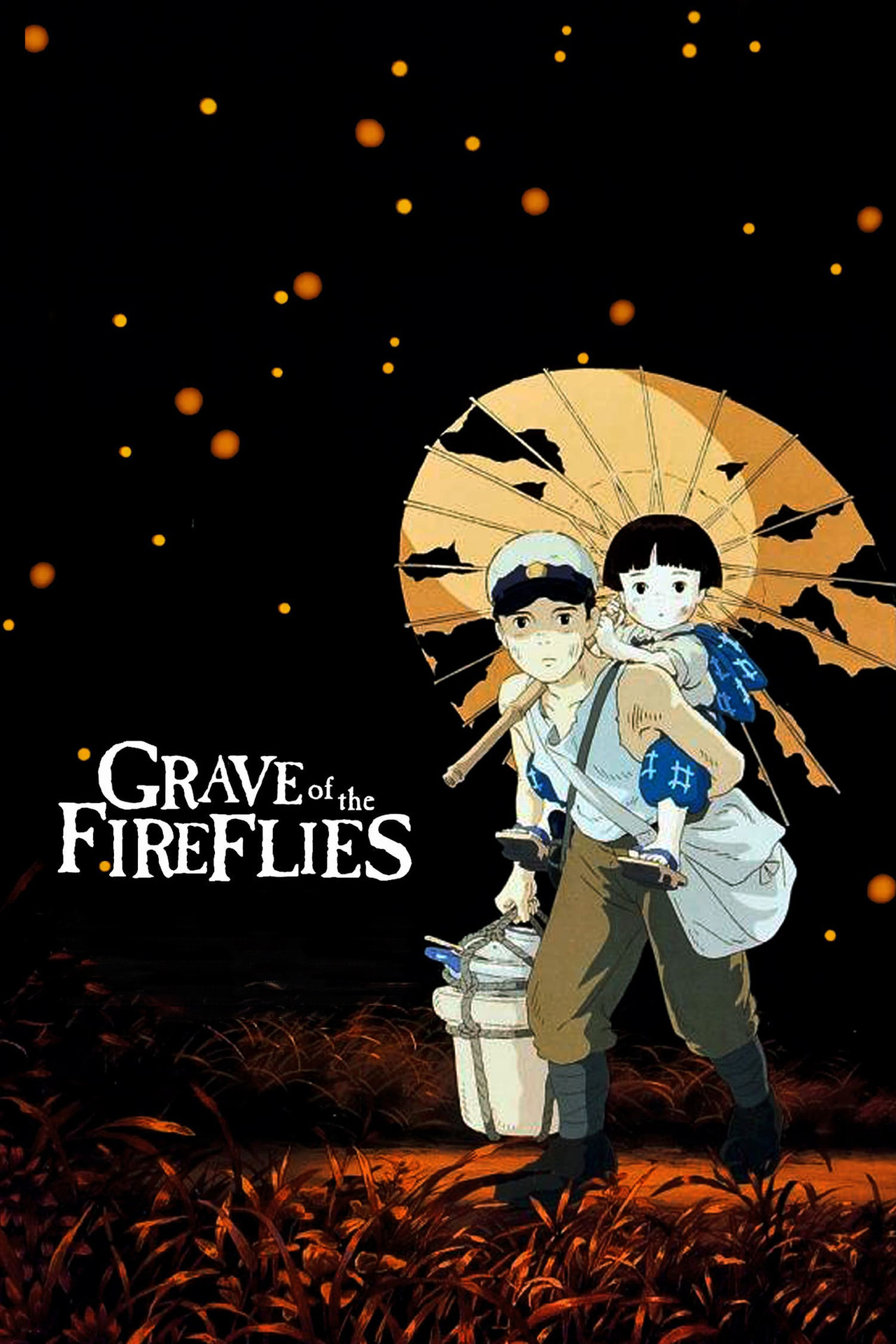
The film tells the story of Seita, a teenage boy, and his little sister Setsuko in the final months of World War II in Japan. After their mother dies in a firebombing raid, the two children are left to fend for themselves. The film follows their slow, agonizing decline as they struggle to find food and shelter in a country that has been bombed to rubble.
Director Isao Takahata makes a bold narrative choice: he tells you the ending in the first scene. The film opens with Seita dying alone in a train station. A janitor finds a candy tin among his belongings and tosses it into a field. Fireflies rise from the grass, and the ghosts of Seita and Setsuko appear, and the story begins in flashback. You know from the very first frame that this does not end well. And somehow, that makes everything that follows even more painful.
Setsuko is one of the most heartbreaking characters in cinema history. She is four years old. She does not understand why her mother is gone or why they have to live in an abandoned shelter. She makes mud rice balls when there is no real food. She develops a rash from malnutrition that she scratches at constantly. She asks for her mother in a voice that will haunt your dreams.
The scene that absolutely destroys people is near the end, when Seita discovers that Setsuko has been sucking on marbles and rocks because she is so hungry she has confused them for the fruit drops from their candy tin. She is hallucinating from starvation. She is four years old, and she is dying of hunger in one of the wealthiest nations on earth, because adults failed her.
Grave of the Fireflies is rated the number one saddest film on many lists, and we do not disagree. It is also a film that many people say they will never watch again. Not because it is bad -- because it is too good. Too real. Too painful. One viewing is enough to carry the weight of it for a lifetime.
The Boy in the Striped Pyjamas (2008)
UglyCry Rating: 8.8/10
The Boy in the Striped Pyjamas approaches the Holocaust through the eyes of Bruno, the eight-year-old son of a Nazi concentration camp commandant. Bruno does not understand what the camp is. He thinks the people inside are wearing "pyjamas" and playing some kind of strange game. When he befriends Shmuel, a Jewish boy on the other side of the fence, the two form a bond that is pure and innocent and, we know with growing dread, doomed.
The film's power lies in dramatic irony. We understand everything that Bruno does not. We know what the "pyjamas" really are. We know what the smoke from the chimneys means. We know that the friendship between these two boys exists on the razor's edge of an abyss. And watching Bruno's slow, innocent approach toward the truth is like watching someone walk toward a cliff in slow motion.
The ending of this film is one of the most shocking and devastating in modern cinema. We will not spoil it for those who have not seen it, but we will say this: the final two minutes recontextualize everything you have watched. The camera lingers on a closed door, and the silence that follows is the loudest thing you have ever heard. It is the sound of innocence being obliterated.
What makes this film particularly effective as a cry-trigger is that it forces empathy in an uncomfortable direction. You feel the horror through a Nazi family's eyes, which means you experience the loss the way millions of other families experienced it -- suddenly, incomprehensibly, and without any possibility of undoing it. It is a gut punch that does not let up.
More War Movies That Will Break You
While the four films above represent the emotional high-water mark, several other war movies deserve mention for their tear-inducing power.
Saving Private Ryan (1998)
Saving Private Ryan is famous for its harrowing D-Day opening sequence, but the moments that make you cry come later. Captain Miller's dying words to Private Ryan -- "Earn this" -- set up the film's devastating bookend, where an elderly Ryan stands at Miller's grave and asks his wife, "Tell me I've led a good life. Tell me I'm a good man." The weight of survivor's guilt in those two sentences is almost unbearable. UglyCry Rating: 8.2/10
1917 (2019)
1917 uses its famous single-shot technique to create an immersive, suffocating experience. When one of the two main characters dies shockingly early in the film, you feel the loss physically because you have been running alongside him for what feels like real time. The ending, with Schofield sitting against a tree reading letters from home, is quietly devastating. UglyCry Rating: 7.9/10
Hacksaw Ridge (2016)
Hacksaw Ridge tells the true story of Desmond Doss, a conscientious objector who saved 75 men during the Battle of Okinawa without ever carrying a weapon. The scene where he keeps praying, "Lord, let me get one more," as he lowers wounded soldiers down a cliff face one by one, is an extraordinary portrait of faith and courage that hits believers and non-believers alike. UglyCry Rating: 7.6/10
Come and See (1985)
Come and See is the most disturbing war film ever made. It follows a teenage boy in Belarus during the Nazi occupation, and by the end of the film, his face has aged decades. This is not a movie that makes you cry with sadness alone -- it makes you cry with a kind of existential horror at what human beings are capable of doing to each other. It is not an easy watch, but it may be the most important film on this list. UglyCry Rating: 8.5/10
The Specific Scenes That Break People
War movies have produced some of the most iconic crying scenes in film history. Here are the moments our community reports as the biggest tear triggers:
The red coat in Schindler's List. Guido's final walk in Life Is Beautiful. Setsuko's candy tin in Grave of the Fireflies. The shower scene in The Boy in the Striped Pyjamas. The "Earn this" moment in Saving Private Ryan. Desmond Doss whispering "one more" in Hacksaw Ridge. The boy's face aging in Come and See.
What these scenes share is a common thread: they all center on innocence destroyed. Whether it is a child's life, a father's dignity, or a young soldier's belief that the world makes sense, war movies are at their most devastating when they show us something precious being taken away forever.
Another pattern we notice is silence. The most powerful crying moments in war movies are often quiet. Not explosions. Not battle scenes. But a man looking at a gold pin. A child sucking on a marble. A door closing. War movies understand that true grief is not loud. It is the absence of sound where there should be life.
Why We Need Sad War Movies
It is fair to ask: why would anyone voluntarily watch something this painful? Why seek out movies that leave you emotionally wrecked?
The answer is simple and important. We need sad war movies because forgetting is easy and comfortable, and remembering is hard and necessary.
Every film on this list is, in its own way, an act of witness. Schindler's List ensures that the Holocaust is not reduced to a paragraph in a history textbook. Grave of the Fireflies forces us to see the human cost of firebombing civilian cities. The Boy in the Striped Pyjamas reminds us that the machinery of genocide was operated by people with families of their own.
Crying at these films is not weakness. It is the correct response. It means your empathy is intact. It means that even decades or centuries after these events, you can still feel the weight of what happened. And that feeling -- that ugly, messy, can't-stop-the-tears feeling -- is what keeps us from ever saying "never again" as an empty phrase.
War movies make us cry because they refuse to let us look away. And in a world that constantly tempts us to scroll past the hard stuff, that refusal is a gift.
So grab your tissues, dim the lights, and let yourself feel it. These films earned your tears.
Looking for more movies that will make you ugly cry? Browse our full collection of [cry-rated movies](/movies) and find your next emotional experience.