A Film That Begins With Death and Only Gets More Devastating
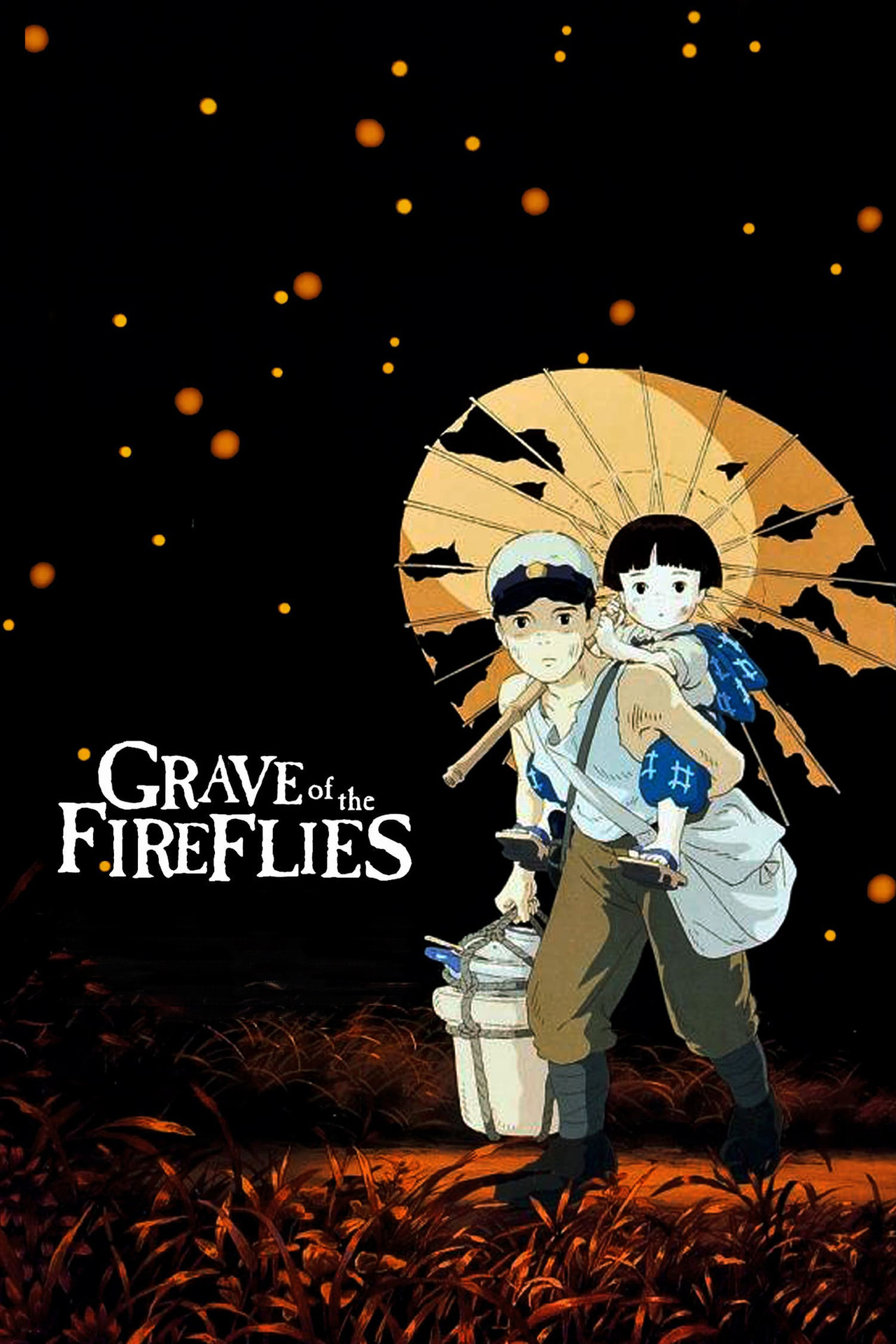
There is a moment, right at the start of Grave of the Fireflies, that tells you exactly what kind of experience you are walking into. A boy sits slumped against a pillar in a train station. His voice, quiet and matter-of-fact, tells us: "September 21, 1945. That was the night I died." No dramatic orchestral swell. No slow-motion sequence. Just a child, alone, stating the fact of his own death as though reporting the weather.
It is one of the most quietly devastating openings in the history of cinema, and it sets the tone for what many consider to be the saddest movie ever made. Not the saddest animated movie. Not the saddest Japanese movie. The saddest movie, full stop.
If you have seen Grave of the Fireflies, you already know. If you haven't, consider this both an invitation and a warning. This is a film that does not manipulate you into crying. It simply shows you the truth about war, about childhood, about love between siblings, and lets that truth do its work on you. The tears come not because the film is trying to make you cry, but because it would be inhuman not to.
The Genius of Opening With the Ending
Director Isao Takahata made a storytelling choice that sounds like it should lessen the emotional impact: he tells you how the story ends before it begins. You know, from the very first frame, that fourteen-year-old Seita will die. You know his little sister Setsuko will not survive. There is no suspense about the outcome.
And yet this knowledge makes every subsequent scene more painful, not less. When you watch Seita catch fireflies to light up their cave shelter, you are not wondering whether things will turn out okay. You already know they won't. Instead, you are fully present with these two children in their fleeting moments of joy, understanding with terrible clarity how precious and temporary those moments are.
This is the same narrative technique used in Greek tragedy, and Takahata wields it with the same devastating precision. Every laugh Setsuko lets out is undercut by the knowledge of what is coming. Every small kindness Seita shows her is both beautiful and unbearable. The dramatic irony transforms what could have been a straightforward wartime tragedy into something that operates on a much deeper emotional level, one that asks you to sit with grief rather than be surprised by it.
Seita and Setsuko: A Bond That Breaks You
At the center of the film is the relationship between Seita, a teenage boy thrust into an impossible situation, and Setsuko, his four-year-old sister who depends on him completely. Their bond is the engine that drives the entire emotional experience, and Takahata renders it with an authenticity that is almost unbearable.
Setsuko is not a Hollywood version of a cute child. She is a real four-year-old, drawn and voiced with painstaking attention to how actual small children behave. She throws tantrums. She asks the same question over and over. She doesn't understand what is happening around her. She cries for her mother. She makes mud rice balls when there is no real food to eat, and the casualness of that moment, a starving child playing pretend with dirt, is the kind of detail that lodges in your chest and refuses to leave.
Seita, meanwhile, is a boy trying to be a man in a world that has stripped away every support system he had. He is proud, sometimes frustratingly so. His decision to leave their aunt's house and strike out on their own is driven by adolescent pride as much as by genuine mistreatment, and Takahata does not let him off the hook for it. Seita is not a perfect hero. He is a child making decisions no child should have to make, and some of those decisions are wrong, and the consequences are fatal.
This refusal to idealize either sibling is what makes their story so powerful. You do not cry for Seita and Setsuko because they are noble or saintly. You cry for them because they are real, because they are children, because no child anywhere should ever have to live the way they are forced to live.
How Animation Amplifies the Grief
There is a persistent misconception that animation is a medium for children, that drawn images cannot carry the same emotional weight as live-action performances. Grave of the Fireflies demolishes that idea so thoroughly that it should never need to be argued again.
Takahata and his team at Studio Ghibli use the medium of animation not as a softening filter but as an amplifier. The watercolor backgrounds of Kobe before the firebombing are gorgeous, all warm light and gentle detail, which makes the subsequent destruction feel like a violation. The fireflies themselves, glowing softly in the darkness of the children's shelter, are rendered with a beauty that is almost painful because you understand what they symbolize: brief, fragile lives that burn brightly and then go out.
The animation also allows Takahata to show things that would be almost unwatchable in live action. Setsuko's physical decline, her body growing thinner, her skin breaking out in rashes from malnutrition, is depicted with clinical precision but through the slight abstraction of animation. This does not lessen the horror. If anything, it deepens it, because your mind fills in the gaps between what is drawn and what is real, and what your mind supplies is worse than anything a camera could capture.
Compare this approach to other Studio Ghibli films. Hayao Miyazaki's works, masterpieces like My Neighbor Totoro and Spirited Away, use animation to create wonder and magic. Takahata uses it to strip away every defense you have against the reality of suffering. Both approaches demonstrate the extraordinary range of what animation can do, but Takahata's is the one that leaves you staring at a blank screen afterward, unable to move.
The Historical Weight Behind Every Frame
To fully understand why Grave of the Fireflies hits so hard, you need to understand what the firebombing of Japan actually was. Between March and August of 1945, American B-29 bombers conducted a systematic campaign of incendiary bombing against Japanese cities. The firebombing of Tokyo on March 9-10, 1945 alone killed an estimated 100,000 civilians in a single night, making it the deadliest air raid in human history, more immediately lethal than either atomic bomb.
Kobe, where the film is set, was bombed repeatedly. The city's dense wooden architecture made it particularly vulnerable to incendiary weapons. Entire neighborhoods were reduced to ash. Families were separated, infrastructure was destroyed, and the civilian population was left to fend for itself in conditions of extreme scarcity.
The film is based on a semi-autobiographical short story by Akiyuki Nosaka, who survived the firebombing of Kobe as a teenager. Like Seita, Nosaka had a younger sister who depended on him. Like Setsuko, that sister died of malnutrition. Nosaka wrote the story as an apology to his sister, an expression of guilt for not being able to save her. He carried that guilt for the rest of his life.
Knowing this context adds another layer to the film's emotional devastation. This is not just a story. This happened. Not exactly as depicted, but close enough that the distinction barely matters. Thousands of children across Japan lived some version of Seita and Setsuko's experience, and many of them did not survive.
The Scenes That Destroy You
Certain moments in Grave of the Fireflies have become almost legendary for their emotional impact. If you have seen the film, you know exactly which ones they are. If you haven't, be warned: these descriptions alone may be difficult to read.
The Candy Tin
Setsuko's fruit drop tin is one of the most heartbreaking props in cinema history. Early in the film, it is a source of simple childish pleasure, a container of sweet candy that Setsuko guards jealously and savors one piece at a time. As food becomes scarce, the candies run out, and Setsuko begins filling the tin with water to make "candy water," sucking the last traces of sweetness from the empty container.
The tin appears one final time at the end of the film, and what Seita finds inside it is something we will not spoil here, but it is the moment where most viewers completely break down. A simple tin container becomes a vessel for everything the film is about: innocence, loss, the desperate human attempt to hold onto sweetness in a world that has gone bitter and dark.
Setsuko's Decline
The film does not rush Setsuko's deterioration. It unfolds gradually, scene by scene, in small details that accumulate into something overwhelming. She becomes listless. She develops sores. She hallucinates. She stops playing. She lies still in the shelter while Seita desperately tries to find food.
The slowness is the cruelty. You watch this child fade, and there is nothing you can do, and there is nothing Seita can do, and the film simply refuses to look away. It asks you to witness what starvation does to a four-year-old, and your only option is to sit there and take it.
The Fireflies
The scene that gives the film its name is deceptively gentle. Seita catches fireflies and releases them inside the mosquito netting of their shelter, creating a canopy of soft, pulsing light for Setsuko. It is a moment of pure beauty, a brother doing everything in his power to give his sister one moment of wonder in the middle of a nightmare.
The next morning, the fireflies are dead. Setsuko buries them in a small grave and asks, in a voice that is far too calm for a four-year-old, why fireflies have to die so soon. She then asks why her mother had to die. The connection between the two questions is simple, obvious, and absolutely shattering.
Why "People Who Never Cry" Cry at This Film
We have heard it hundreds of times in reviews, in comments, in conversations. "I never cry at movies, but this one broke me." There is something specific about Grave of the Fireflies that bypasses the usual emotional defenses people put up when watching sad films.
Part of it is the animation. People who have trained themselves not to cry at live-action drama sometimes lower their guard for an animated film, expecting something lighter. By the time they realize what kind of film this is, it is too late. Their defenses are already down.
Part of it is the children. It is possible to intellectualize adult suffering, to maintain some critical distance from characters who are old enough to have made choices that led them to their circumstances. You cannot do that with a four-year-old. Setsuko did nothing. She is guilty of nothing. She is a child who wants candy and her mother and to not be scared, and the world kills her for it.
But the biggest reason, we think, is that the film earns its grief honestly. It does not use swelling music to tell you when to feel sad. It does not have characters deliver speeches about the tragedy of war. It simply shows you two children trying to survive, and it lets the reality of their situation speak for itself. There is no manipulation, only truth, and truth is harder to defend against than manipulation.
Where It Stands Among Ghibli's Greatest
Studio Ghibli has produced some of the most beloved films in animation history, but Grave of the Fireflies occupies a unique position in the catalog. It is universally acclaimed but rarely rewatched. It is considered essential viewing but comes with a warning. It is the film that even Ghibli fans approach with caution.
Hayao Miyazaki once reportedly said that he disliked the film because he felt it was too emotionally overwhelming. Whether or not that anecdote is precisely accurate, it speaks to something real about the divide within Ghibli's output. Miyazaki's films offer hope, magic, and the resilience of the human spirit. Takahata's masterpiece offers no such comfort. It is a film that looks at the worst of what humans do to each other and refuses to provide an easy emotional exit.
This does not make it better or worse than Spirited Away or My Neighbor Totoro. It makes it different. It is the film in Ghibli's catalog that proves the studio's range extends far beyond fantasy and wonder, into territory that most filmmakers, animated or otherwise, would never dare to explore.
A Cultural Impact That Endures
In Japan, Grave of the Fireflies is sometimes broadcast on television around the anniversary of the end of World War II. It is shown in schools. It is considered an important part of how the country processes and remembers the suffering of civilians during the war. It is not treated as entertainment but as testimony.
Internationally, the film has become a touchstone in discussions about the power of animation as a medium, the depiction of war in cinema, and the question of what constitutes the "saddest film ever made." It regularly appears at or near the top of lists ranking the most emotionally devastating movies ever created, alongside live-action films like Schindler's List and Manchester by the Sea.
Roger Ebert included it in his Great Movies series, calling it "an emotional experience so powerful that it forces a rethinking of animation." The film holds a 100% rating on Rotten Tomatoes. It is, by nearly any critical measure, a masterpiece.
And yet many people will only watch it once. Not because it is not great, but because it is too great, too effective at what it sets out to do. It is a film that achieves its artistic goals so completely that the experience of watching it is almost too much to bear.
The Film We Need But Can Barely Endure
So why watch it? Why put yourself through something that you know will leave you emotionally devastated?
Because Grave of the Fireflies does something that very few works of art in any medium manage to do. It makes the abstract concrete. War, famine, civilian casualties: these are concepts we read about in textbooks and see in news headlines. They are real, but they feel distant. Takahata's film takes those abstractions and gives them a name and a face. Two names. Two faces. A fourteen-year-old boy and his four-year-old sister.
After watching this film, you will never read about civilian casualties in quite the same way. The numbers will never be just numbers again. And that, painful as it is, matters. It matters because empathy is not a luxury. It is a necessity. And sometimes it takes a work of art this powerful to remind us of that.
If you are ready, watch Grave of the Fireflies. Bring tissues. Bring the whole box. And know that the tears this film draws from you are not a sign of weakness. They are a sign that you are paying attention.