There are movie scenes that make you cry, and then there is the opening of Up. Pixar's 2009 masterpiece doesn't wait for the third act to break your heart. It does it before the title card even appears. In roughly four minutes and twenty seconds, with almost no dialogue, the film tells an entire love story -- from first meeting to final goodbye -- and leaves audiences around the world reaching for tissues before they even know the main character's name.
If you've seen it, you know exactly what we're talking about. If you haven't, consider this your warning: we're going deep.
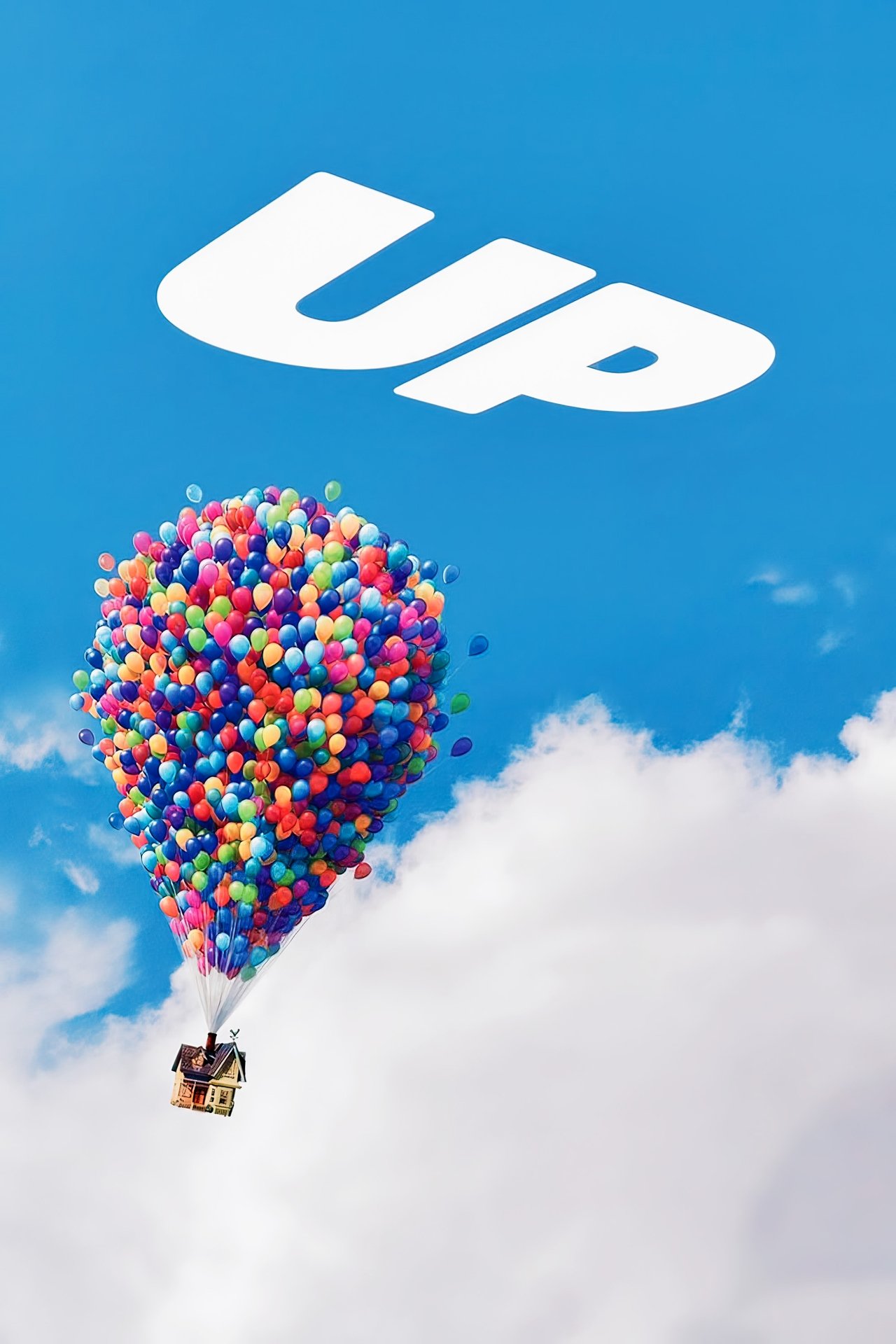
The Setup: Two Kids, One Dream
The montage begins with young Carl Fredricksen, a shy, bespectacled boy who idolizes the explorer Charles Muntz. He stumbles upon Ellie, a wild-haired, fearless girl who shares his passion for adventure. She shows him her "Adventure Book" -- a scrapbook with a section labeled "Stuff I'm Going to Do" -- and makes him promise they'll go to Paradise Falls together someday.
It's a childhood promise. The kind we all make and most of us forget. But Carl and Ellie don't forget. They just never quite get there.
What Pixar accomplishes in this opening scene is a kind of narrative compression that most filmmakers wouldn't dare attempt. They introduce two characters, establish their dreams, and then proceed to tell the entire arc of a lifelong relationship in a sequence that runs shorter than most movie trailers. And somehow, it works. Not just adequately -- it works on a level that has fundamentally changed how people think about animated storytelling.
Shot by Shot: How Four Minutes Tell a Lifetime
The genius of the montage lies in its structure. Director Pete Docter and his team at Pixar didn't just string together cute moments. They built a carefully orchestrated emotional journey that mirrors the rhythms of real life -- its joys, its routines, its disappointments, and its quiet devastations.
The sequence moves through a series of visual vignettes, each one lasting just a few seconds but carrying enormous narrative weight.
First, we see Carl and Ellie's wedding. They fix up their dream house together, painting the mailbox, settling in. There's a beautiful shot of them lying in the grass, watching clouds drift by, pointing out shapes -- she sees one that looks like a baby. The film cuts to them painting a nursery, and then, in one of its most quietly gutting transitions, we see them sitting in a doctor's office. Ellie's head is bowed. Carl reaches for her hand.
Pixar never says the word "miscarriage" or "infertility." They don't need to. The shift in color palette, the body language, the way Ellie's shoulders curve inward -- it communicates everything. This is visual storytelling at its most precise and most compassionate. The audience understands immediately, and the weight of that understanding is enormous because Pixar trusted them to get there on their own.
Then the montage pivots. Carl finds Ellie in the yard, chin in her hands, staring at nothing. He brings her the Adventure Book. He points to Paradise Falls. She smiles. They start saving.
And here is where the montage becomes truly devastating, because what follows is a series of moments showing how life gets in the way of dreams. The Paradise Falls jar fills with coins. Then a tire blows, and the jar is emptied. The jar fills again. The roof springs a leak. The jar is emptied. Carl breaks his leg. The jar is emptied. Over and over, the jar fills and empties, fills and empties, and the years pile up around Carl and Ellie like snowdrifts.
They grow older. Their hair goes gray. Their movements slow. Carl's ties change with the decades. Ellie's glasses get thicker. But through it all, they have each other. There's a shot of them sitting in matching armchairs, Carl reading the paper and Ellie reading a book, their feet propped up side by side, and it radiates the kind of contentment that only decades of companionship can produce.
Then one day, Carl decides it's time. He buys the tickets to Paradise Falls. He puts them in an envelope. He plans a surprise picnic on the hill where they used to watch clouds. But as Ellie tries to climb the hill, she stumbles. She can't make it.
The next shot is Ellie in a hospital bed. Then an empty chair beside Carl in the church. Then Carl, alone, walking back to the house with a single balloon.
Four minutes. No dialogue. A complete life.
Michael Giacchino's Score: The Unsung Heartbreak
The montage would not work -- could not work -- without Michael Giacchino's score, specifically the piece titled "Married Life." It is, without exaggeration, one of the greatest pieces of film music ever composed.
The piece begins as a waltz, light and playful, with a jaunty piano melody that perfectly captures the giddiness of young love. As the montage progresses, the orchestration deepens. Strings swell beneath the piano. The tempo shifts subtly. What started as a dance becomes something more like a hymn.
Giacchino's brilliance is in how he uses the waltz structure itself as a storytelling device. A waltz is cyclical -- it repeats, it circles back, it returns to where it started. This mirrors the repetitive rhythms of a shared life: the same morning routines, the same armchairs, the same dreams deferred and revisited. But each time the melody cycles back, it carries more weight. The notes are the same, but the emotional context has shifted, so the same melody that once sounded joyful now sounds elegiac.
When the montage reaches Ellie's illness and death, the waltz slows and thins. The full orchestra drops away until it's just the piano again, alone, playing the melody one last time. It mirrors Carl's experience perfectly -- the fullness of a shared life reduced to a single voice, playing on in an empty room.
Giacchino won the Academy Award for Best Original Score for Up, and while the entire film's music is excellent, "Married Life" is the piece that will outlive us all. It has become a shorthand for cinematic heartbreak, sampled in countless tribute videos, played at weddings and funerals alike, and recognized even by people who have never seen the movie.
Why It Works: The Psychology of the Montage
So why does this sequence destroy us so completely? Why do grown adults -- people who can sit stone-faced through horror movies and war dramas -- fall apart watching an animated film about a balloon salesman?
The answer lies in several intersecting psychological principles.
First, there is the power of recognition. The montage doesn't show us anything extraordinary. There are no explosions, no dramatic betrayals, no life-or-death stakes in the traditional sense. What it shows us is ordinary life -- fixing a house, saving money, sitting together, growing old. We cry because we recognize ourselves in it. We cry because we know this story, or we fear it, or we hope for it.
Second, there is the principle of earned emotion. Pixar doesn't manipulate you with sad music played over sad images. Instead, the montage builds its emotional impact through accumulation. Each small moment adds to the next, and by the time the sequence reaches its conclusion, the audience has invested in Carl and Ellie's relationship so deeply that the loss feels personal. You haven't just watched a character die. You've watched a marriage. You've watched a life.
Third, there is the devastating use of unfulfilled dreams. The Adventure Book -- with its blank pages labeled "Stuff I'm Going to Do" -- becomes a symbol of everything Carl and Ellie wanted but never achieved. It's not just that Ellie dies. It's that she dies without ever going to Paradise Falls. The dream they shared as children, the promise that bonded them, goes unfulfilled. And for anyone who has ever put off a dream, who has ever told themselves "someday," that hits with the force of a freight train.
Finally, there is what we might call the silence principle. The montage contains almost no spoken words. This forces the audience to engage actively with the storytelling -- to read body language, interpret visual cues, and fill in emotional context from their own experience. When a character says "I'm sad," we understand it intellectually. When a character shows us sadness through posture and gesture and the way light falls across their face, we feel it viscerally. Pixar's choice to strip away dialogue was not a limitation but a superpower.
How the Montage Recontextualizes Everything
Here's something that doesn't get discussed enough: the opening montage isn't just a standalone emotional experience. It fundamentally changes how you experience the rest of Up.
Without the montage, Carl is a grumpy old man who hits a construction worker with his cane and floats his house away with balloons. He's eccentric at best, unhinged at worst. But because we've seen the montage, we understand everything. Every irritable outburst, every refusal to leave the house, every obsessive attachment to Ellie's chair -- it all makes sense. We don't just sympathize with Carl. We ache for him.
The montage also gives the adventure its stakes. When Carl finally reaches Paradise Falls, it's not just a plot point. It's the fulfillment of a promise made to a dead wife. When he opens the Adventure Book and finds that Ellie filled those blank pages with photos of their life together -- their ordinary, beautiful, imperfect life -- and wrote "Thanks for the adventure. Now go have a new one," the audience is not just crying. They are reckoning with the entire film's thesis: that the adventure was never about the destination. It was about the person you shared the journey with.
This is masterful filmmaking. The montage plants seeds in the first five minutes that don't fully bloom until the final act, creating an emotional payoff that is as structurally elegant as it is devastating.
The Theater Experience: No One Saw It Coming
When Up premiered at the 2009 Cannes Film Festival, the audience gave it a standing ovation. Reports from that screening -- and from opening weekends around the world -- consistently describe the same phenomenon: stunned silence in the theater during the montage, followed by the quiet sound of hundreds of people trying not to cry.
Audiences walked into what they expected to be a fun Pixar adventure about a flying house. Many were parents bringing young children. Nobody was prepared. The trailers had focused on the colorful adventure elements -- the balloons, the talking dogs, the exotic birds. The montage blindsided people.
This element of surprise amplified the emotional impact enormously. When you walk into a film expecting to cry -- a war movie, a cancer drama, a Nicholas Sparks adaptation -- your emotional defenses are up. You're braced for it. But Up disarmed its audience completely. By the time people realized what was happening, it was too late. The tears were already falling.
Pete Docter has spoken in interviews about this deliberate choice. The team at Pixar knew they were opening the film with an unconventional sequence, and there were internal debates about whether it was too heavy for an animated family film. But Docter argued that the emotional foundation was essential -- that without it, the rest of the movie wouldn't work. He was right.
Comparisons to Other Great Movie Openings
Film history is full of iconic openings. The shark attack in Jaws. The Star Destroyer in Star Wars. The rotating hallway in Inception. But the opening of Up stands apart because it accomplishes something none of these other openings even attempt: it tells a complete, self-contained story that also serves as the emotional engine for everything that follows.
The closest comparison might be the opening of WALL-E, another Pixar film that uses extended visual storytelling with minimal dialogue. But where WALL-E's opening establishes a world and a character, Up's opening establishes an entire relationship and its aftermath. It's not just scene-setting. It's a short film embedded within a feature, and it might be the best short film Pixar has ever made -- which, for a studio that has won multiple Academy Awards for its actual short films, is saying something.
Some critics have compared it to the silent film tradition, and the comparison is apt. Like Chaplin and Keaton, Pixar proved that you don't need words to break a heart. You just need the right images in the right order, set to the right music.
The Cultural Impact: Animation Is Not Just for Kids
The opening of Up has become one of the most frequently cited pieces of evidence in the ongoing argument that animation is a medium, not a genre -- that animated films are capable of the same emotional depth and artistic sophistication as any live-action drama.
Before Up, this argument existed primarily in academic and critical circles. After Up, it entered the mainstream. The montage became a cultural touchstone, referenced in think pieces, parodied in comedy shows, and shared millions of times on social media. "The first ten minutes of Up" became shorthand for unexpected emotional devastation, a reference point that transcended the film itself.
The sequence also influenced a generation of filmmakers and storytellers. Its demonstration that complex adult emotions -- grief, regret, the bittersweet passage of time -- could be explored in an animated film opened doors that have never closed. Films like Inside Out, Coco, and Soul owe a debt to the montage's proof of concept: that audiences will follow animated characters into the deepest emotional territory, as long as the storytelling is honest.
Why We Keep Coming Back
Here's the thing about the opening of Up: it doesn't get easier. You'd think that knowing what's coming would blunt the impact, that familiarity would build resistance. But it doesn't. If anything, rewatching the montage hits harder each time, because each viewing brings new life experience to bear on the material.
Watch it as a teenager, and you cry because it's sad. Watch it as a newlywed, and you cry because you recognize the hope. Watch it as a parent, and you cry at the doctor's office scene. Watch it after losing someone you love, and you cry at the empty chair. The montage grows with you. It meets you where you are.
That is the mark of truly great art. It doesn't just make you feel something once. It makes you feel something different every time, because it holds up a mirror that reflects whatever you bring to it.
The opening of Up is four minutes and twenty seconds long. It contains no spoken dialogue, no action sequences, no plot twists. It is, on paper, nothing more than a montage of a man and a woman living an ordinary life together. And it is, by nearly universal agreement, one of the most emotionally powerful sequences in the history of cinema.
Four minutes. No words. A lifetime of love. And every single time, we ugly cry.