The Saddest Movie Scenes That Aren't Death Scenes
Cinema has trained us to expect the tears at funerals, deathbeds, and final goodbyes. When someone asks about the saddest movie scenes, our minds tend to jump to the ones where somebody dies -- Mufasa falling into the stampede, Jack sinking beneath the Atlantic, the opening of Up. Death is cinema's go-to emotional weapon, and it works because it is final, universal, and inescapable.
But here is the thing: some of the most emotionally devastating scenes in film history do not involve death at all. They are about abandonment, forgotten memories, grief that refuses to heal, love that cannot bridge an impossible gap, and the quiet horror of losing someone who is still standing right in front of you. These scenes often hit harder than death scenes because they depict pain that has no resolution, no closure, no end. The characters survive, and that is precisely what makes it so devastating -- they have to keep living with what happened.
We have rated thousands of movies on the UglyCry scale, and some of the highest-scoring individual scenes on our site are moments where everyone walks away alive. Here are the saddest movie scenes that will wreck you without a single character dying.
Scenes That Prove You Don't Need Death to Devastate
The Opening Montage -- Up (2009)

We need to start here because this scene redefined what animated movies could do to an audience. The first ten minutes of Up compress an entire lifetime into a wordless montage set to Michael Giacchino's score. Carl and Ellie meet as children, fall in love, get married, fix up their dream house, try to have children, suffer a miscarriage, grow old together, and then Ellie gets sick and dies.
But here is what makes this one of the saddest movie scenes ever crafted: it is not Ellie's death that breaks you. It is the jar.
Carl and Ellie keep a jar labeled "Paradise Falls" -- the exotic destination they have dreamed of visiting since childhood. Throughout the montage, we watch them fill that jar with savings again and again, only to empty it every time life intervenes. A flat tire. A broken leg. A fallen tree on the house. Each time, the dream gets pushed back. Each time, they start filling the jar again with cheerful determination. And then suddenly Ellie is old, and she is in a hospital bed, and the jar sits on a shelf, still not full enough.
That jar is every dream you have deferred. Every trip you said you would take "next year." Every conversation you will have "when things calm down." Every plan that keeps getting pushed to a future that is running out faster than you think. Pixar understood that the saddest thing in life is not losing someone -- it is realizing, too late, that you wasted the time you had with them on things that did not matter.
The scene works because it is not manipulative. There is no swelling dialogue, no tearful speech. Just a quiet, honest depiction of how a life unfolds -- full of love, full of disappointment, full of days that feel ordinary until suddenly they are all gone. It is four minutes long and it contains more emotional truth than most films manage in two hours.
UglyCry Rating: 9.1/10 -- You will cry before the title card appears.
Allie Doesn't Recognize Noah -- The Notebook (2004)
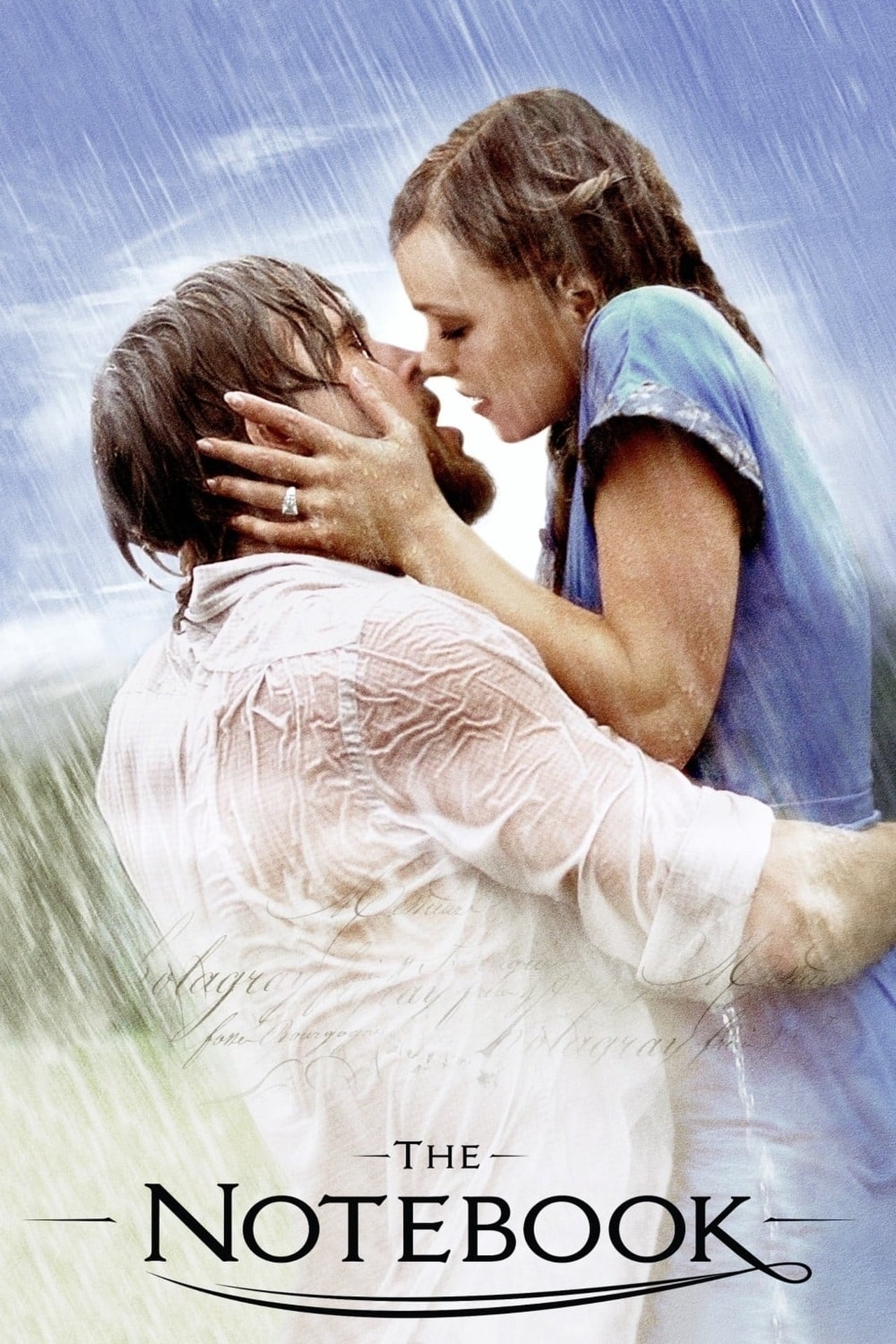
The Notebook is famous for its sweeping summer romance, for Ryan Gosling hanging from a Ferris wheel, for the rain-soaked kiss. But the saddest scene in the film has nothing to do with young love. It takes place in a nursing home, in quiet light, between two elderly people.
Noah reads to Allie from a notebook -- their love story, written down so she can hear it on days when Alzheimer's has taken her memories. For a few miraculous minutes, the story works. Allie's eyes clear. She recognizes the man sitting beside her. She remembers their life, their love, their children. They dance. They hold each other. And then, mid-sentence, mid-moment, the fog rolls back in. Her face shifts from recognition to confusion to terror. She does not know this man. She screams for help. Nurses rush in. Noah is escorted out of the room, and he stands in the hallway alone, holding the notebook that contains a life his wife can no longer access.
This scene is devastating because it depicts a loss that is worse than death in one specific way: it keeps happening. Ellie in Up dies once. Allie disappears over and over, every single day, and Noah has to watch it happen every single time. The cruelty is in the repetition. He gets her back for a few minutes, enough to remember what he has lost, and then she is gone again. It is Sisyphus with a love story.
The scene taps into one of our deepest fears -- not that we will lose the people we love, but that we will lose them while they are still here. That someone you shared a life with could look at you with the eyes of a stranger. Alzheimer's is not death; it is something many people find even more terrifying, and The Notebook does not flinch from showing why.
UglyCry Rating: 7.9/10 -- The romance makes you cry, but the Alzheimer's scenes destroy you.
"Remember Me" to Mama Coco -- Coco (2017)

In the climax of Coco, twelve-year-old Miguel sits beside his great-grandmother Mama Coco, who is elderly, nearly unresponsive, and slipping away from the family. In the Land of the Dead, Miguel has just learned that Mama Coco's father -- Hector -- was not the villain the family believed him to be. He was a loving father who was murdered, whose songs were stolen, and who is now facing "the final death" because Mama Coco is the last person alive who remembers him. If she forgets, Hector ceases to exist entirely.
Miguel picks up a guitar and begins to play "Remember Me" -- the lullaby Hector wrote for his daughter decades ago. At first, nothing happens. The family watches nervously. Mama Coco stares ahead. And then, slowly, something shifts behind her eyes. Her lips begin to move. She starts to sing along, quietly at first, then with more certainty. She remembers. She remembers her father. She remembers being loved.
Then she reaches into a hidden compartment in her wheelchair and pulls out the torn corner of a photograph -- the missing piece that proves Hector's identity. She has kept it for her entire life. She never forgot. She was just waiting for someone to remind her.
The reason this scene regularly appears on lists of the saddest movie scenes in animation is that it operates on so many emotional frequencies simultaneously. On the surface, it is a boy saving his great-great-grandfather from oblivion. Below that, it is a daughter finally getting to honor the father she lost as a child. And underneath everything, it is a statement about memory as an act of love -- that remembering someone is not passive, it is a choice, and it is the most important choice we can make.
The tears this scene produces are not purely sad. They are tears of relief, of recognition, of the overwhelming beauty of a family connection that survived decades of silence and misunderstanding. It is one of the rare movie moments that makes you cry because something went right.
UglyCry Rating: 8.2/10 -- You will not make it through this scene. Do not even try.
"I Can't Beat It" -- Manchester by the Sea (2016)
Late in Manchester by the Sea, Lee Chandler's nephew Patrick asks him to stay in Manchester, to become his legal guardian, to build a life there. Lee, played by Casey Affleck in a performance of almost unbearable restraint, cannot do it. He cannot explain why, not fully. He just says, quietly, "I can't beat it."
Those four words contain the entire emotional thesis of the film. Lee is a man who accidentally caused the death of his three children in a house fire years earlier. He left the stove unattended. He went to get beer. He came home to find his house burning. His children died. His marriage dissolved. And he has been a ghost ever since, working as a janitor in a basement, picking fights in bars, shuffling through a life that he has no interest in living but lacks the courage or permission to end.
"I can't beat it" is not a dramatic declaration. It is not delivered with trembling lips or a swelling score. Affleck says it almost casually, like someone reporting the weather. And that is exactly why it lands like a punch to the sternum. Lee is not being dramatic about his grief. He has simply assessed it accurately. Some wounds do not heal. Some guilt cannot be processed. Some people break in ways that cannot be fixed, and the bravest thing they can do is admit it.
This scene challenges one of cinema's most comforting lies -- that time heals all wounds, that love conquers all, that there is always a path forward. Manchester by the Sea says: sometimes there is not. Sometimes a person has been through something so catastrophic that recovery is not a realistic expectation. And the movie does not judge Lee for this. It simply presents his truth and asks you to sit with it.
The saddest part is that Lee still loves Patrick. He still tries. He arranges for Patrick to have a good life, even though he cannot be the one to provide it. His love has survived even though his capacity for daily life has not. That gap -- between loving someone and being able to show up for them -- is one of the most painful human experiences there is, and this film depicts it with surgical precision.
UglyCry Rating: 8.5/10 -- A different kind of devastation. Quiet, permanent, and real.
The Lifeboat Separation -- Titanic (1997)
Everyone remembers the ending of Titanic -- Jack freezing in the water, Rose promising to never let go, the whistle. But the scene that arguably devastates more deeply happens earlier, when the lifeboats are being loaded and the terrible mathematics of survival become clear.
Rose gets into a lifeboat. Jack stands on the deck. The boat begins to lower. They look at each other, and in that look is the understanding that this is probably goodbye. Rose is being saved, and Jack is being left behind, and the machinery of class and gender is making this decision for them. Then Rose climbs out of the lifeboat and runs back to Jack, because she would rather die with him than live without him.
But the scene that truly breaks hearts is happening all around them -- the elderly couple lying in bed together as water fills their room, choosing to die together rather than be separated. The mother tucking her children into bed and telling them a story as the ship sinks, knowing she cannot save them. The musicians playing on because it is the only thing left they can do.
These are not death scenes, not yet. They are separation scenes. Farewell scenes. Scenes about people making impossible choices in impossible moments. The lifeboat loading sequence is devastating because it forces you to ask a question you never want to answer: if there were not enough seats, who would you save? Who would you leave behind? And could you live with that choice afterward?
The emotional mechanic at work here is anticipatory grief -- mourning a loss before it has fully happened. Every person standing on that deck knows what is coming. Every person in a lifeboat knows what they are rowing away from. The scene makes you cry not because someone dies, but because you are watching people face the knowledge that death is coming and they cannot stop it.
The Pre-Funeral Eulogy -- The Fault in Our Stars (2014)
Hazel and Gus are both terminal cancer patients. They know they are going to die. So Gus arranges something extraordinary: a pre-funeral. He wants to hear his eulogies while he is still alive to appreciate them.
Hazel stands in a church and delivers a eulogy for a boy who is sitting right in front of her, alive, listening. She talks about their love. She talks about infinity. She says, "There are infinite numbers between 0 and 1... some infinities are bigger than other infinities... I cannot tell you how thankful I am for our little infinity."
The scene in The Fault in Our Stars is excruciating because it takes the one comforting fiction about eulogies -- that the person being honored cannot hear the pain in your voice -- and removes it. Gus has to sit there and watch the person he loves grieve for him in advance. Hazel has to stand there and mourn someone who is still breathing. The artifice of the pre-funeral makes the real funeral, which everyone in the room knows is coming soon, unbearably present.
What makes this one of the saddest movie scenes without death is precisely that nobody dies in it. Death is hovering in the room like a guest who arrived too early, and everyone can see it, and no one can ask it to leave. The scene taps into a fear that is specific to anyone who has loved someone with a terminal diagnosis: the excruciating period of anticipatory grief, when you are mourning a loss that has not happened yet but is absolutely guaranteed to happen soon.
Every word of love Hazel speaks is simultaneously a declaration and a goodbye. That duality is what makes the scene impossible to watch without crying.
UglyCry Rating: 7.8/10 -- The romance gets you, but this scene in particular is a different level.
The Final Song -- A Star Is Born (2018)
In the closing minutes of A Star Is Born, Ally stands on stage and sings "I'll Never Love Again" -- a song Jackson wrote for her before his death. The camera holds on Lady Gaga's face as she performs, and you can see the exact moment where acting ends and something real begins. The grief in her voice is not performed. It is channeled.
But the scene that precedes this -- the one without death in it -- is Ally listening to the demo recording of the song for the first time after Jackson is gone. She sits in a room and presses play, and suddenly his voice fills the silence, and the song is a love letter from beyond, and she has to sit there and receive it knowing he will never write another one.
The emotional mechanic here is the artifact -- the recording, the letter, the voicemail you cannot bring yourself to delete. We hold onto these fragments because they contain the voice of someone who is no longer speaking, and every time we play them, we experience a miniature resurrection followed immediately by a miniature death. The person comes back for the length of a song, and then the song ends, and they are gone again.
A Star Is Born understands this phenomenon perfectly, and it uses the demo recording to deliver one of the saddest movie scenes in recent memory -- not by showing you a death, but by showing you what it feels like to be left behind with nothing but a recording and a melody.
The Beach Scene -- Roma (2018)
Alfonso Cuaron's Roma builds slowly, quietly, almost meditatively for most of its runtime. Cleo, a domestic worker in 1970s Mexico City, moves through her days with quiet dignity -- cleaning, cooking, caring for a family that treats her as both essential and invisible. She becomes pregnant. Her boyfriend abandons her. She goes into labor during a political massacre. Her baby is stillborn.
And then, near the end of the film, Cleo takes the children she cares for to the beach. Two of them wade into the ocean and get caught in the current. Cleo, who cannot swim, walks into the waves after them. She pulls them out. They cling to her on the sand, soaking wet and terrified, and they say, "I love you, Cleo." And Cleo, holding these children who are not hers, on a beach where she just risked her life for them, says quietly: "I didn't want her to be born."
She is talking about her own baby. The baby she lost. And in this moment, on this beach, holding children who love her, she confesses the guilt she has been carrying -- that some part of her did not want her own child, and that maybe, in some cosmic accounting she cannot articulate, that wish was granted in the worst possible way.
This is one of the saddest movie scenes in modern cinema because it combines survivor's guilt, maternal grief, class inequality, and unconditional love into a single moment on a beach. Nobody dies in this scene. But something enormous and painful surfaces, and Cleo's confession -- barely audible over the waves -- is the kind of truth that only emerges when you have been pushed past every emotional boundary you have.
The scene devastates because it depicts a grief that has no audience, no recognition, no support system. Cleo's pain exists in a world that does not consider it important enough to acknowledge. And yet it is as vast and real as the ocean she just walked into.
Why These Scenes Hit Harder Than Death Scenes
There is a reason these non-death scenes often score as high or higher than death scenes on the UglyCry scale. Death, in cinema, is an ending. It is terrible, but it is final. There is a before and an after. The narrative can move toward acceptance, tribute, or memory.
But the scenes on this list depict ongoing pain. Alzheimer's does not end -- it erases and erases and erases. Grief that "can't be beat" does not resolve -- it just continues, day after day, year after year. A deferred dream does not expire dramatically -- it just sits on a shelf, gathering dust, until the person who dreamed it is too old to chase it.
These scenes are the saddest movie scenes precisely because they deny us the comfort of closure. They show us pain that persists, love that endures without reward, and the human capacity to keep going even when going feels impossible. They are mirrors, not windows. We cry because we see ourselves.
Which non-death scene devastates you the most? Rate these movies and more on [UglyCry](/movies) and let us know which moments broke you.