Why We Still Cannot Let Go of Titanic
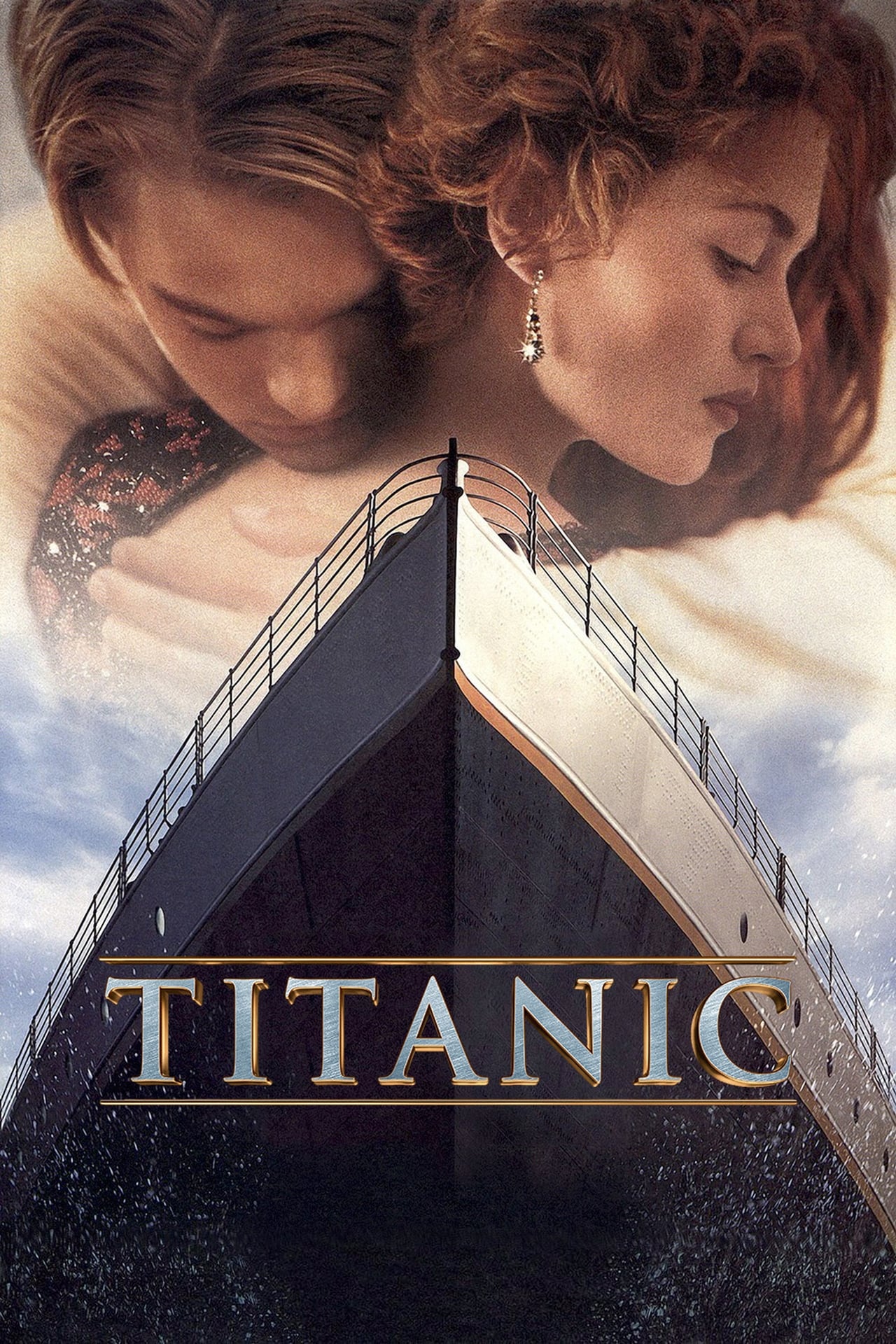
It has been nearly three decades since Titanic hit theaters in 1997, and we are still arguing about a door.
James Cameron's epic has grossed over two billion dollars worldwide, won eleven Academy Awards, and launched one of the most recognizable love stories in cinematic history. But beyond the spectacle, beyond the special effects and the record-breaking box office, Titanic endures because it tells a deeply human story about love, loss, class, and the terrifying fragility of life. It is a film that makes people cry on first viewing, on fifth viewing, and on every viewing after that.
The Titanic Ending Explained
The Sinking
The film shifts from sweeping, old-fashioned love story to full-on survival thriller the moment Titanic hits the iceberg. What began as a class-crossing romance between Jack and Rose suddenly becomes a ticking-clock disaster movie. The ship's slow, inevitable descent into the Atlantic mirrors the way their time together is running out. Every tilted hallway, every flooding corridor, and every flare in the sky is a reminder that this love story was always doomed by history.
Cameron's direction during the sinking sequence is meticulous and relentless. He intercuts between the grand scale of the disaster — the ship splitting in half, the stern rising vertically into the sky — and the intimate, human-scale terror of people scrambling for lifeboats, clinging to railings, and making impossible choices. The band plays on. The steerage passengers are locked below. The lifeboats row away half-empty while hundreds thrash in the water. The sinking is not just spectacle; it is a portrait of how class, power, and chance determine who survives and who does not.
What makes the sequence so devastating is the contrast with everything that came before. For an hour and a half, the film has immersed you in the beauty and grandeur of Titanic — the sweeping staircases, the chandeliers, the endless ocean. Now all of it is being swallowed by the sea. The same ship that represented freedom and possibility for Jack and Rose becomes a death trap. The romance and the disaster are inseparable: the higher the love story soars, the harder the fall.
The Water
When the ship finally disappears beneath the surface, the chaos gives way to an eerie, frozen stillness. Jack and Rose find a piece of floating debris — the infamous "door." Jack insists Rose climb on top while he stays in the water, holding on to the edge. The scene is quiet, almost gentle, but the horror is in the details: Jack's shivering, Rose's breath turning to ice, the bodies around them going silent one by one. The water isn't just cold; it's a character, the merciless force that decides who lives and who dies.
The silence of this scene is what makes it so unbearable. After thirty minutes of screaming, crashing, and orchestral chaos, the sudden quiet forces you to sit with the reality of what has happened. Over fifteen hundred people have just died, and the ocean has already gone still. The camera lingers on faces frozen mid-expression, on bodies floating motionless, on the vast emptiness of the Atlantic. It is one of the most haunting sequences in mainstream cinema — not because of what it shows, but because of the absence it depicts.
Jack and Rose's conversation on the debris is stripped of all pretense. There are no grand declarations, no dramatic speeches. Just two people who know that time is running out, trying to hold on to each other and to hope. Jack's voice grows weaker. His grip loosens. And the audience, no matter how many times they have seen it, begins to brace for what comes next.
The Promise
Knowing he won't survive, Jack makes Rose promise she will live on. He doesn't ask her to mourn him forever; he asks her to keep going, to have a full life, to die an old woman warm in her bed. Rose promises, and that promise becomes the emotional engine of the entire ending. When Jack slips away and Rose realizes he's gone, her grief is immediate and raw — but so is her determination. She pries her frozen hand from his, calls for help, and fights to stay alive. Jack's death is tragic, but it's also a passing of the torch: he gives Rose a future she never would have claimed for herself.
The promise scene works because it reframes Jack's death as an act of purpose rather than mere tragedy. He is not simply a victim of the sinking. He is choosing, with his final breaths, to ensure that Rose survives — not just physically, but spiritually. He is asking her to honor their love by refusing to let it end with his death. That reframing transforms the scene from hopeless to bittersweet: Jack dies, but what he gave Rose lives on.
The Frame Story Resolution
In the present-day storyline, the elderly Rose has carried the memory of Jack — and the Heart of the Ocean diamond — for a lifetime. After telling her story, she stands at the edge of the research ship and quietly drops the diamond into the sea, returning it to the place where her life changed forever. That act is both goodbye and thank you. Later, she goes to sleep, surrounded by photos that prove she kept her promise: flying planes, riding horses, building a life on her own terms.
The final image is ambiguous on purpose. We see young Rose walking up the grand staircase on the restored Titanic, greeted by Jack and the passengers who died. Is it a dream? Is it the afterlife? The film never answers. What matters is the emotional truth: Rose has finally come full circle. She kept her promise, lived her life, and now she's reunited with the person who set her free.
Those photos by Rose's bedside are easy to miss on a first viewing, but they carry enormous weight. Each one is evidence of a life Jack made possible. Rose became a pilot. She rode horses in the surf. She lived boldly, independently, on her own terms. The tragedy is not that Jack died — it is that he never got to see the life his love created.
The Door Debate: Could Jack Have Survived?
The door scene has become one of the most argued-over moments in movie history, spawning decades of fan theories, scientific analyses, and late-night talk show segments.
The Case for Jack Could Have Fit:
Fans have freeze-framed, measured, and diagrammed the debris. MythBusters even tested it, showing that, in theory, with the right positioning and life jacket support, both Jack and Rose might have been able to stay afloat. The internet has done the math: surface area, buoyancy, weight distribution — all in an effort to prove that Jack didn't have to die. National Geographic later conducted their own experiment with Cameron present, and the results were similarly inconclusive — depending on variables like water temperature, exhaustion, and positioning, survival was theoretically possible but practically unlikely.
The Case for It Does Not Matter:
James Cameron has been blunt: Jack had to die. Not because of physics, but because of story. Titanic isn't a survival puzzle where the goal is to min-max buoyancy; it's a tragic romance about one person's love transforming another person's entire life. If Jack survives, the movie becomes a very different story — more like a romantic comedy about whose turn it is to do the dishes and less like an operatic, once-in-a-lifetime love that reshapes a soul.
Within the logic of the film, the door debate is almost beside the point. Jack's choice to put Rose on the debris and stay in the water is the culmination of everything we've learned about him: he's selfless, impulsive, and utterly committed to her survival over his own. The scene isn't asking, "Could he have lived?" It's asking, "What does it mean to love someone enough to give them the life you'll never have?"
The fact that we are still debating this nearly three decades later is itself a testament to the film's power. We argue about the door because we don't want Jack to die. We want the physics to save him because the story won't. And that refusal to accept his death is exactly the emotional response Cameron designed the film to provoke.
The Never Let Go Scene
Rose's line — "I'll never let go, Jack. I'll never let go." — has fueled years of jokes and memes because immediately after saying it, she lets his body sink into the ocean. On the surface, it looks like a contradiction. In context, it's the opposite of hypocrisy.
"Never let go" is not about physically holding on to Jack's hand. It's about holding on to what he gave her: courage, self-worth, and the will to live her own life. If she literally refused to let go, she would freeze to death with him. Letting go of his body is the only way to keep his promise alive. She has to release him in order to carry him with her.
When Rose blows the whistle to get the lifeboat's attention, it's the moment the promise becomes action. She chooses life in the most literal way possible, gasping through frozen lungs to call for rescue. That choice doesn't erase Jack; it honors him. Every breath she takes afterward is a continuation of the vow she made on that door.
The whistle itself is a detail worth noting. It belonged to the officer who had been trying to maintain order during the sinking. Rose finds it on his body floating nearby. In a film full of symbols — the diamond, the drawing, the ship itself — the whistle is the most pragmatic. It is not romantic. It is not beautiful. It is a tool of survival, and Rose using it is the most concrete expression of Jack's final wish: stay alive, by any means necessary.
The Music: James Horner's Score
No discussion of Titanic's emotional power is complete without acknowledging James Horner's score. The main theme, built around the haunting vocals of a pennywhistle and Celtic-influenced synthesizers, has become one of the most recognizable pieces of film music in history. Celine Dion's "My Heart Will Go On" became a global phenomenon, but the instrumental score is what does the real emotional work throughout the film.
Horner's music operates on two levels. During the romance, it is sweeping and hopeful, full of soaring strings and Celtic melodies that evoke the vastness of the ocean and the intensity of first love. During and after the sinking, the same themes return in minor keys, fragmented and slowed, transforming hope into elegy. The music doesn't tell you how to feel — it amplifies what you're already feeling and makes it impossible to hold back.
The score earned Horner the Academy Award for Best Original Score, and "My Heart Will Go On" won Best Original Song. But the score's true achievement is structural: it weaves the same melodic material through joy and grief, binding the film's two halves into a single emotional arc. When the theme plays over Rose's final memory, it carries every earlier association — the first kiss on the bow, the dancing below decks, the frozen water — and collapses them into one overwhelming feeling.
Why Titanic Endures
Titanic endures because it's not just about a ship sinking; it's about a person awakening. At the start, Rose is trapped — by class, by expectations, by an engagement that feels like a cage. Jack doesn't save her by whisking her off into a happily-ever-after. He saves her by showing her that she is allowed to want more, to say no, to live for herself.
Jack's love sets Rose free, and the proof is her entire life after the sinking. The photos by her bedside show a woman who did everything she was told she couldn't do: she traveled, she worked, she had adventures, she grew old on her own terms. The tragedy is that Jack isn't there to share it. The miracle is that she has it at all.
The film also endures because of its class commentary. Jack and Rose's romance is not just boy-meets-girl; it is a collision between two worlds separated by money, manners, and social expectation. The sinking strips all of that away. In the water, first class and steerage are equals. The ship that enforced their separation is gone, and what remains is simply two people and the choices they make. That leveling is part of why the ending resonates so deeply: it reminds us that love, death, and loss do not respect class boundaries.
We can't let go of Titanic because it taps into a universal fear and a universal hope. The fear: that love will end, that loss is inevitable, that nothing lasts. The hope: that even when love breaks your heart, it can still change you for the better. Jack dies, the ship sinks, the diamond disappears into the ocean — but the impact of that brief, impossible romance echoes across an entire lifetime.
That's why we're still arguing about the door. It's not really about wood and buoyancy. It's about our refusal to accept that sometimes love is real, transformative, and still not enough to save someone. Titanic tells us that love is always worth it, even when it ends in heartbreak — because what remains is the person you become after you've loved and lost.