12 Animated Movies That Will Make You Ugly Cry
Animation is not just for kids. These animated movies that make you cry prove that drawn and digital characters can be just as devastating as live-action performances — and in many cases, even more so. There is something about animation that bypasses our emotional defenses. We walk in expecting bright colors and comic sidekicks, and we walk out wrecked.
The medium itself gives filmmakers unique tools for emotional storytelling. Animation can exaggerate expressions to communicate feelings that live-action faces cannot. It can use color, light, and visual metaphor in ways that feel organic rather than artificial. And because we instinctively lower our guard around animated characters, the emotional punches land harder.
Below are 12 animated films that will absolutely wreck you emotionally — whether through heartbreaking stories, devastating character arcs, or bittersweet endings that linger long after the credits roll.
1. Coco (2017)

Pixar's Coco is a vibrant celebration of family, memory, and the Day of the Dead — but beneath the colorful visuals lies a story that will shatter you. Miguel's journey to the Land of the Dead starts as a fun adventure, but by the time "Remember Me" plays in its most emotional context, you'll be sobbing. The film's exploration of legacy, loss, and how we keep loved ones alive in our hearts is pure emotional devastation.
What makes Coco especially devastating is the way it recontextualizes the entire film in its final act. The goofy skeleton sidekick turns out to be the emotional core, the catchy song turns out to be a stolen lullaby, and the stakes shift from "will Miguel get home" to "will an old woman remember her father before he ceases to exist." The final scene, where Miguel sings to Mama Coco, has one of the highest cry rates of any animated scene ever made.
Why it makes you cry: The final scenes with Mama Coco, the theme of being forgotten, and the realization of what family really means.
2. Grave of the Fireflies (1988)
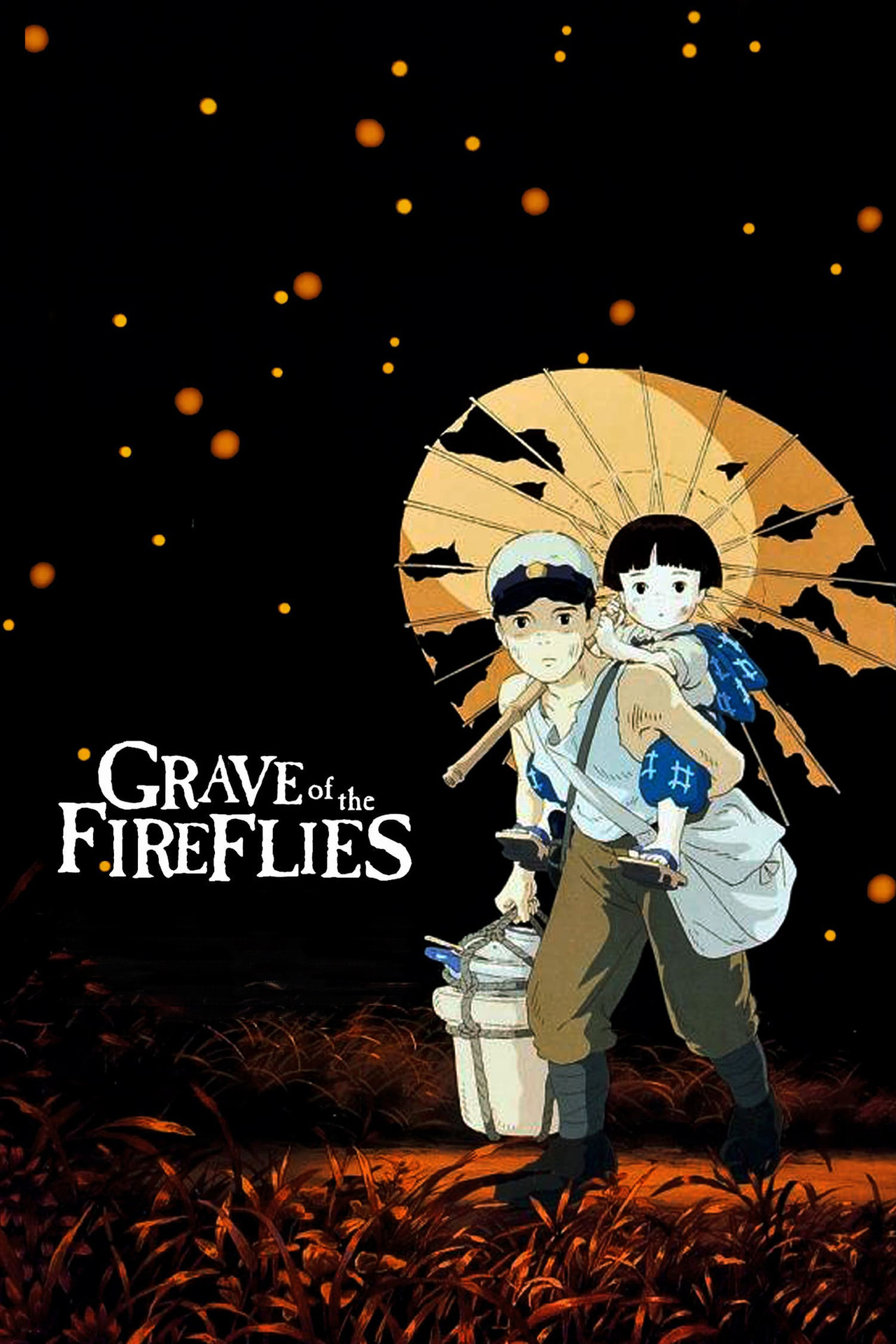
Studio Ghibli's most harrowing film, Grave of the Fireflies, is less a war movie and more a slow, painful portrait of two siblings trying to survive in wartime Japan. There's no sugarcoating here: this is one of the bleakest, most emotionally draining animated films ever made.
The film tells you from the very first frame that Seita will die. That foreknowledge does not soften the blow — it intensifies it. Every moment of tenderness between the siblings, every small joy they find in the middle of devastation, is shadowed by the knowledge that it cannot last. Director Isao Takahata refuses to offer comfort or resolution. The film does not argue that suffering has meaning; it simply shows you what suffering looks like when it has none.
Why it makes you cry: The innocence of Seita and Setsuko contrasted with the brutality of war, and the inevitability of their fate, will leave you gutted.
3. Up (2009)

Up is infamous for delivering one of the most emotionally destructive opening sequences in cinema. In just a few minutes, we watch Carl and Ellie's entire life together — dreams, joys, disappointments, and loss — unfold without a single word of dialogue. The rest of the film is heartfelt and funny, but that opening montage alone is enough to make anyone ugly cry.
What makes the montage so effective is its compression. Pixar tells a complete love story — courtship, marriage, dreams deferred, infertility, aging, and death — in under five minutes. Michael Giacchino's waltz-like score starts playful and gradually becomes elegiac, mirroring the arc of a shared life. The montage doesn't just make you sad about Carl and Ellie; it makes you think about your own relationships, your own unfulfilled dreams, and the terrifying speed at which a life can pass.
Why it makes you cry: The "Married Life" montage, Carl's grief, and the realization that adventure can be found in the life you've already lived.
4. Toy Story 3 (2010)
If you grew up with Toy Story, the third film hits like a freight train. Woody, Buzz, and the gang face the reality of being outgrown, forgotten, and discarded. The incinerator scene is pure nightmare fuel for the heart, and the final goodbye between Andy and his toys is a generational tearjerker.
The incinerator scene works because the toys stop fighting. They look at each other, reach for each other's hands, and accept their fate together. For a moment, Pixar convinces you that they might actually let the characters die — and in that moment, the emotional weight of three films' worth of attachment crashes down at once. The final scene, where Andy plays with his toys one last time before giving them to Bonnie, is a farewell not just to the characters but to the audience's own childhood.
Why it makes you cry: The toys accepting their fate together, and Andy's farewell as he passes his childhood on to someone new.
5. The Lion King (1994)
The Lion King is a classic for a reason, and a big part of that is how unapologetically it deals with grief. Mufasa's death is one of the most traumatic scenes in animated history, and watching young Simba try to wake his father is still almost unbearable.
The scene is devastating because of Simba's inability to understand what has happened. He nudges Mufasa, pulls at his ear, and curls up under his massive paw. He does not comprehend death; he just knows his father will not wake up. That gap between what the audience knows and what Simba understands creates an ache that many viewers carry for decades. It is often the first encounter with death that children experience in fiction, and its impact is formative.
Why it makes you cry: The rawness of Simba's loss, his guilt, and his eventual confrontation with his past.
6. Inside Out (2015)
Inside Out turns emotions into characters, then makes you feel all of them at once. Following Riley as she struggles with a big move and growing up, the film dives into depression, memory, and the necessity of sadness. And then there's Bing Bong, whose sacrifice is engineered to destroy you.
Bing Bong's goodbye works because it represents something universal: the loss of childhood imagination. He is Riley's imaginary friend, a being made of cotton candy and forgotten games, and when he fades away so that Joy can escape the memory dump, he is not just dying — he is being outgrown. His final line, "Take her to the moon for me," is a request from childhood to adulthood: keep dreaming, even without me. The film's deeper thesis — that sadness is not the enemy of joy but its essential partner — is what elevates it from a clever concept to a genuinely moving experience.
Why it makes you cry: Bing Bong's goodbye, the realization that joy can't exist without sadness, and the honesty about childhood ending.
7. Your Name (Kimi no Na wa) (2016)
Makoto Shinkai's body-swapping romance starts off quirky and fun, then slowly reveals a tragic twist that recontextualizes everything. Your Name blends longing, missed connections, and cosmic fate into a story that feels both intimate and epic.
The film's emotional power builds through accumulated frustration: two people who are clearly meant to find each other keep being separated by forces beyond their control — distance, time, and memory itself. By the climax, when they stand on opposite sides of a hill at twilight and can feel each other's presence but cannot quite connect, the longing is almost unbearable. Shinkai's stunningly beautiful animation makes every frame feel like a painting of a memory you're afraid of losing.
Why it makes you cry: The sense of almost finding each other, the time-bending tragedy, and the desperate hope that love can cross any distance.
8. The Iron Giant (1999)
The Iron Giant is a story about a boy and his giant robot, but at its core it's about identity, choice, and sacrifice. The Giant's struggle between being a weapon and choosing to be "Superman" is simple, powerful, and devastating.
The genius of the film is that it lets the Giant choose who he wants to be. He was built as a weapon, and the military treats him as a threat, but Hogarth teaches him that identity is not determined by design — it is determined by choices. When the Giant flies into the missile with his eyes closed and whispers "Superman," he is choosing selflessness over programming, love over destruction. It is one of the purest moments of heroism in animated film, and it is heartbreaking precisely because of how simple it is.
Why it makes you cry: The Giant's final act, his whispered "Superman," and the way the film captures the purity of childhood friendship.
9. Bambi (1942)
Bambi may be old, but its emotional impact hasn't dulled. The film's quiet, pastoral beauty makes its central tragedy even more shocking. Generations of viewers have been traumatized by one off-screen gunshot and a fawn calling for a mother who will never answer.
What makes Bambi's loss so effective is the absence of explanation. There is no villain monologue, no dramatic confrontation, no chance to say goodbye. One moment Bambi's mother is there; the next, she is not. The gunshot happens off-screen, and the silence that follows is deafening. For many children, this is their introduction to the concept that the people they love can be taken away suddenly and without reason — and that understanding never fully leaves them.
Why it makes you cry: The suddenness of loss, and watching Bambi grow up with that absence always lingering.
10. Wolf Children (2012)
Wolf Children follows a young mother raising two half-wolf children after their father dies. It's a gentle, bittersweet story about parenthood, sacrifice, and letting your children choose their own paths — even when that means letting them go.
Director Mamoru Hosoda crafts a story that is less about the fantasy premise and more about the universal experience of watching your children become people you did not expect. Hana's quiet strength as she navigates single motherhood, poverty, and the impossible task of raising children who are literally half-wild is deeply moving. The final scene, where one child chooses the human world and the other chooses the wild, is a devastating portrait of parental love: the willingness to let go, even when letting go breaks your heart.
Why it makes you cry: The quiet struggles of single motherhood, the kids' conflicting identities, and the final choices they make.
11. Finding Nemo (2003)
Finding Nemo opens with a brutal scene of loss, then spends the rest of the film exploring anxiety, overprotection, and trust. Beneath the jokes and colorful fish, it's a story about a father learning to let his son live, even when the world feels terrifying.
Marlin's overprotectiveness is not played as a joke — it is played as trauma. He lost his wife and nearly all of his children in the opening scene, and every anxious decision he makes afterward is a direct consequence of that loss. When he finally tells Nemo, "I promise I will never let anything happen to you," and Dory responds, "Then nothing would ever happen to him," the film delivers its thesis in a single line. Love is not about preventing all harm; it is about trusting the person you love to survive it.
Why it makes you cry: Marlin's fear, Nemo's determination, and the moment Marlin finally believes in his son.
12. Spirited Away (2001)
While Spirited Away isn't a traditional tearjerker, its emotional power sneaks up on you. Chihiro's journey from frightened child to brave, compassionate heroine is deeply moving, and the film's themes of change, memory, and saying goodbye can hit surprisingly hard.
The tears in Spirited Away are not from tragedy but from beauty and bittersweetness. When Chihiro remembers Haku's true name and they fall through the sky together, the moment is overwhelming not because something bad is happening but because something precious is being restored. And the ending — Chihiro walking back through the tunnel, unable to look back, knowing she may never return — captures the feeling of leaving childhood behind with an ache that lingers long after the film ends. Miyazaki does not tell you to be sad; he simply shows you something beautiful and lets you feel the loss of it on your own.
Why it makes you cry: The bittersweet farewell to Haku, the sense of leaving a magical childhood behind, and the feeling that something beautiful has slipped just out of reach.
Why Animated Tearjerkers Hit So Hard
Animated movies that make you cry often do so because they bypass realism and go straight for emotional truth. Stylized visuals, music, and symbolism let filmmakers express feelings in ways live-action sometimes can't. Whether it's a robot choosing to be a hero, a girl navigating her own emotions, or siblings trying to survive the unthinkable, these stories use animation to amplify heartbreak.
There is also a disarming quality to animation. We associate it with childhood, with safety, with stories that will end happily. When an animated film breaks that contract — when it shows us death, grief, or the slow erosion of memory — the shock is compounded by betrayal. We did not expect to be hurt here, in this colorful, musical, seemingly innocent space. That surprise is a weapon, and the best animated filmmakers know exactly how to use it.
Finally, animated films often deal with universal themes — growing up, letting go, losing the people we love — in ways that are stripped of the specific. A real actor's face belongs to one person; an animated character's face can belong to anyone. That abstraction allows viewers to project their own experiences onto the story with unusual intensity, making the emotional connection feel deeply personal even when the characters are toys, fish, or skeletons.
If you're in the mood to ugly cry, queue up any of these films, grab a box of tissues, and let the tears flow. Animation isn't just capable of making you feel — it's capable of breaking you, beautifully.