We all have that list. The movies we can't watch on airplanes. The ones we queue up when we need a good, cathartic sob. The films that don't just make our eyes water -- they make our faces crumple, our chins wobble, and our breathing turn into something that can only be described as "ugly crying."
And here's the thing: that's not a weakness. It's a superpower.
Research consistently shows that crying during movies is linked to higher empathy, stronger emotional intelligence, and even improved mood afterward. A good ugly cry is like an emotional reset button. It clears out the psychic cobwebs, reminds us we're human, and connects us to something bigger than our daily routines.
So we put together this list. Fifteen movies that will absolutely wreck you -- and a breakdown of exactly why each one does it. Whether you're looking for your next cathartic movie night or just want to feel something deeply, these are the films that have earned their place in the ugly cry hall of fame.
Grab your tissues. You're going to need the whole box.
The All-Time Devastators
1. Up (2009)
We couldn't start anywhere else. Pixar's Up opens with a wordless montage that compresses an entire marriage -- from first meeting to final goodbye -- into roughly four minutes. By the time the title card appears, the theater is in ruins. Carl and Ellie's love story is told entirely through images and Michael Giacchino's devastating waltz, "Married Life," and it addresses love, loss, aging, and unfulfilled dreams with a precision that leaves no emotional defense intact.
The ugly cry moment: The doctor's office scene, followed by the empty chair in the church. Four minutes, no dialogue, and you're done.
Why it works: Because it shows us ordinary life -- not tragedy on a grand scale, but the quiet accumulation of days spent together and the gaping absence when those days end. We cry because we recognize it, or because we hope for it, or because we've already lived it.
Up earns every single tear.
2. Coco (2017)

Pixar again, because apparently they have a direct line to our tear ducts. Coco follows young Miguel as he journeys to the Land of the Dead during Dia de los Muertos, searching for his great-great-grandfather. What begins as a colorful adventure becomes something far more profound -- a meditation on memory, family, and what it means to truly die.
The ugly cry moment: The final scene, when Miguel sings "Remember Me" to his great-grandmother Mama Coco. She's elderly, suffering from dementia, barely responsive. And then the song reaches her. Her eyes light up. She begins to sing along. She remembers. She remembers her father, the music, the love. In that moment, a lifetime of family wounds begins to heal.
Why it works: Because it touches on one of our deepest fears -- being forgotten -- and then offers the most beautiful antidote imaginable. The idea that love can reach across death, across dementia, across decades of silence, and still find its way home is almost unbearably moving. Anyone who has watched a grandparent fade will be absolutely leveled by this scene.
3. Schindler's List (1993)

Steven Spielberg's black-and-white masterpiece about the Holocaust is not a film you "enjoy." It's a film you endure, and you come out the other side changed. Liam Neeson plays Oskar Schindler, a German industrialist who saved over a thousand Jewish lives during World War II, and Ralph Fiennes is terrifying as the sadistic camp commander Amon Goeth.
The ugly cry moment: The ending. Schindler, having spent his fortune bribing officials and buying workers to save them from extermination, looks at his car, his Nazi party pin, his ring. "I could have got more," he says, breaking down. "I could have got more. I don't know. If I'd just -- I could have got more." He counts the people each possession could have saved. One more person. Two more. The man who saved 1,100 lives collapses under the weight of those he didn't save.
Why it works: Because it confronts us with the arithmetic of moral courage. Schindler did more than almost anyone, and it still wasn't enough. That tension -- between extraordinary heroism and the limitless scope of human suffering -- is what makes the scene so devastating. It asks us what we would have done, and we know the honest answer.
Schindler's List is essential viewing, even if -- especially if -- it breaks you.
4. Grave of the Fireflies (1988)
Studio Ghibli's anti-war film opens with its protagonist, fourteen-year-old Seita, dying alone in a train station. "September 21, 1945. That was the night I died," he tells us. Then the film goes back and shows us how he got there, as he and his four-year-old sister Setsuko try to survive in the aftermath of the firebombing of Kobe.
The ugly cry moment: There are many, but the one that tends to finish people off is Setsuko's death scene. She's been slowly starving, and in her final moments, she offers Seita a handful of stones she's been pretending are rice balls. She smiles. She's so small.
Why it works: Because it refuses to romanticize war or offer false comfort. Director Isao Takahata strips away every possible buffer between the audience and the reality of what happens to children in wartime. There are no heroes swooping in to save the day. There is only a boy trying to keep his little sister alive and failing, and the indifference of a world that lets it happen.
Grave of the Fireflies is often called the saddest movie ever made, and we're not going to argue.
5. Titanic (1997)
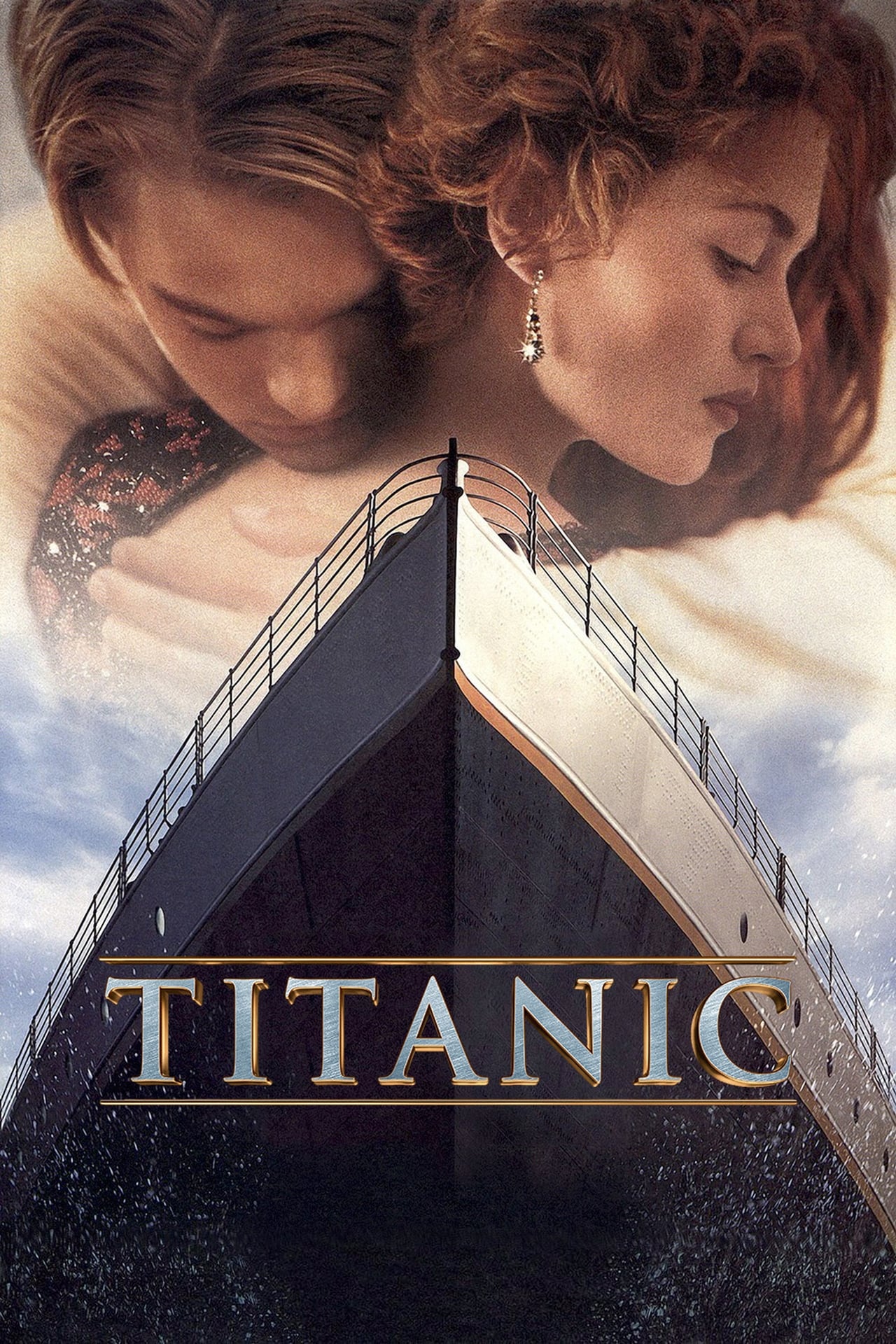
James Cameron's epic romance became the highest-grossing film in history for a reason, and it wasn't just the special effects. At its core, Titanic is a love story between Jack Dawson and Rose DeWitt Bukater, two people from different worlds who find each other on a doomed ship. You know how it ends. Everyone knows how it ends. It doesn't matter.
The ugly cry moment: "I'll never let go, Jack. I'll never let go." Rose, clinging to a piece of wreckage in the freezing Atlantic, promises Jack she'll survive. Then she looks over and realizes he's already gone. She has to pry her frozen fingers from his and let him sink into the black water. The whistle. The rescue boat. The old woman dropping the necklace into the ocean decades later.
Why it works: Cameron understood that the disaster isn't what makes us cry -- it's the human connections within it. The elderly couple holding each other in bed as the water rises. The mother reading to her children. The musicians playing on. The film surrounds Jack and Rose's story with dozens of smaller, quieter moments of love and loss, and together they create an emotional tidal wave that has been pulling audiences under for nearly three decades.
The Slow Burns
6. Manchester by the Sea (2016)
Kenneth Lonergan's film is not interested in making you cry the way most sad movies are. It doesn't build to a cathartic release. Instead, it follows Lee Chandler, played by Casey Affleck in an Oscar-winning performance, as he returns to his hometown after his brother's death and confronts a past tragedy so enormous that he has essentially shut down as a human being.
The ugly cry moment: The scene where Lee runs into his ex-wife Randi on the street. She tells him she knows his heart was broken too. She tells him she was wrong to say the things she said. She's trying to reach him, to offer forgiveness, to connect. And Lee can't accept it. "There's nothing there," he says, and you can see it's true -- not because he doesn't feel, but because feeling anything at all would destroy him.
Why it works: Because it's honest about something most movies won't touch: some grief doesn't resolve. Some wounds don't heal. Some people don't get a redemptive arc. Lee Chandler is not going to be okay, and the film respects him enough not to pretend otherwise. That unflinching honesty is what makes it so profoundly moving.
Manchester by the Sea is the ugly cry for people who don't believe in easy answers.
7. The Green Mile (1999)
Frank Darabont's adaptation of Stephen King's serial novel stars Tom Hanks as Paul Edgecomb, a death row corrections officer who encounters John Coffey, a massive, gentle man convicted of murdering two young girls. Coffey, played by Michael Clarke Duncan in a performance that should have won every award, has a miraculous gift: he can heal.
The ugly cry moment: The execution. John Coffey, who we know is innocent, who can perform miracles, who is terrified of the dark, sits in the electric chair. "Please boss, don't put that thing over my face," he asks about the hood. "Don't put me in the dark. I's afraid of the dark." Paul Edgecomb has to pull the switch. He has to kill the kindest person he's ever met because the system demands it.
Why it works: Because it's a story about innocence destroyed by a world that can't recognize it. John Coffey is a Christ figure -- he heals the sick, absorbs the evil of others, and is executed despite being blameless. The injustice of it is overwhelming, and the fact that Paul Edgecomb carries the weight of that act for the rest of his unnaturally long life only deepens the wound.
The Green Mile asks what happens when we destroy the best of us, and the answer is: we never recover.
8. A Star Is Born (2018)
Bradley Cooper's directorial debut (and the fourth version of this story) follows the relationship between fading rock star Jackson Maine and rising talent Ally. Their love story is electric, passionate, and doomed. Cooper and Lady Gaga have chemistry that practically sets the screen on fire, which makes what comes next all the more devastating.
The ugly cry moment: Jackson's death. After Ally performs at the Grammys -- her dream finally realized -- Jackson, who has been struggling with addiction and depression, hangs himself in the garage. The film doesn't show it graphically. We hear the garage door open. We see Ally's face when she finds out. And then, in the final scene, she sings "I'll Never Love Again" at a tribute concert, and the full weight of everything lands.
Why it works: Because addiction and mental illness don't follow narrative rules. Jackson's death isn't a dramatic twist -- it's the thing everyone around him feared and couldn't prevent. The film handles it with sensitivity and honesty, showing that love, talent, and good intentions aren't always enough to save someone. Ally's final performance is devastating because it's simultaneously a celebration of what they had and an acknowledgment of what was lost.
A Star Is Born will leave you sobbing and then immediately wanting to listen to the soundtrack.
The Pet Movies (A Category of Their Own)
9. Marley & Me (2008)
Look, we need to talk about it. Marley & Me spends most of its runtime as a lighthearted family comedy about the world's worst-behaved Labrador retriever. Owen Wilson and Jennifer Aniston are charming. The dog is chaos incarnate. You're laughing and having a great time. And then the last twenty minutes happen.
The ugly cry moment: Marley gets old. His hips give out. He can't walk anymore. The family takes him to the vet for the last time. John holds Marley's face, tells him he's a great dog, the greatest dog, and stays with him until the end. The family buries him in the backyard under the trees.
Why it works: Because every dog owner knows this day is coming from the moment they bring that puppy home. We sign up for this heartbreak willingly, because the years of love are worth the final goodbye. The film doesn't do anything manipulative -- it just shows, with perfect accuracy, what it's like to lose a dog. And that's enough to reduce anyone who's ever loved a pet to a complete mess.
Marley & Me should come with a warning label.
10. Hachi: A Dog's Tale (2009)
Based on the true story of Hachiko, an Akita in 1920s Japan who waited at a train station every day for his owner to return from work -- and continued waiting for nine years after his owner died. Richard Gere plays the professor, and the dog playing Hachi deserved an Oscar.
The ugly cry moment: The montage of Hachi waiting. Day after day, season after season, year after year. The station workers know him. They bring him food. He grows old. His fur grays. But every afternoon, he's there at the station, watching the commuters file out, looking for the one face that will never appear.
Why it works: Because dogs don't understand death. They only understand absence. Hachi doesn't know his owner is gone. He only knows he hasn't come home yet. The purity of that devotion -- the complete inability to give up hope -- is what breaks us. It's not sad in a complicated way. It's sad in the simplest, most fundamental way possible: unconditional love meeting an absence it can never comprehend.
Hachi: A Dog's Tale is proof that loyalty is the most heartbreaking virtue.
The Romantic Devastation
11. The Notebook (2004)
Nicholas Sparks' most famous adaptation follows the decades-long love story of Noah and Allie, told in flashback by an elderly man reading to a woman in a nursing home. You figure out the twist about halfway through, and it doesn't matter. It still gets you.
The ugly cry moment: The ending. The elderly woman is Allie, suffering from Alzheimer's. The man reading to her is Noah. She remembers him -- briefly, beautifully -- and then forgets again. In the final scene, they lie down together in her hospital bed and die in each other's arms. Noah kept his promise. He stayed.
Why it works: Because it redefines what love looks like when the romance is over and the hard part begins. Noah doesn't just love Allie when she's young and beautiful and they're dancing in the rain. He loves her when she doesn't recognize his face, when she screams at him in confusion, when every day is a fresh loss. That kind of love -- stubborn, patient, unwavering in the face of erasure -- is more romantic than any grand gesture.
The Notebook turns the whole theater into a puddle, every single time.
12. The Fault in Our Stars (2014)
Based on John Green's novel, the film follows Hazel and Gus, two teenagers with cancer who fall in love. Shailene Woodley and Ansel Elgort are wonderful -- funny, sharp, and deeply alive in a way that makes everything that follows hurt even more.
The ugly cry moment: Gus's pre-funeral. Knowing he's dying, Gus asks his friends to give their eulogies while he can still hear them. Hazel stands up and says, "I am in love with you, and I know that love is just a shout into the void, and that oblivion is inevitable, and that we're all doomed and that one day all our labor will be returned to dust. And I know the sun will swallow the only earth we will ever have. And I am in love with you."
Why it works: Because it refuses to make dying noble or beautiful. Gus is angry. Hazel is scared. They're teenagers who should have decades ahead of them, and they know they don't. The film's great achievement is making you feel the full weight of that injustice while simultaneously showing that the love they share -- however brief -- matters. It matters enormously.
The Fault in Our Stars will make you ugly cry and then hug someone you love.
The Ones That Sneak Up on You
13. Life Is Beautiful (1997)
Roberto Benigni's film begins as a whimsical romantic comedy set in 1930s Italy. Guido, a Jewish-Italian waiter, woos the beautiful Dora with elaborate, almost slapstick romantic gestures. They marry. They have a son, Giosue. Life is, as the title promises, beautiful.
Then the Nazis come.
The ugly cry moment: Guido, imprisoned in a concentration camp with his son, convinces the boy that the entire experience is an elaborate game. Points are earned for hiding, being quiet, not crying. The prize is a real tank. He maintains this fiction through starvation, forced labor, and unspeakable horror, all to protect his child's innocence. In the final scene, Guido is led away by guards to be shot. As he passes his son's hiding spot, he does an exaggerated, silly march -- the walk of a clown -- so that Giosue will think it's still part of the game.
Why it works: Because it shows us a father who literally makes himself into a joke to shield his child from the darkest reality imaginable. Guido's sacrifice isn't dramatic or violent in the traditional sense -- it's an act of imagination, of desperate creativity, of love expressed through the only tool he has left: the ability to make his son laugh. The contrast between the comedy of his performance and the horror of his circumstances is almost too much to bear.
Life Is Beautiful will split your heart clean in two.
14. Steel Magnolias (1989)
This ensemble drama set in a small Louisiana town follows a group of women whose friendships sustain them through life's hardest moments. Sally Field, Dolly Parton, Shirley MacLaine, Olympia Dukakis, Daryl Hannah, and Julia Roberts fill the screen with warmth, humor, and the kind of fierce female friendship that feels like home.
The ugly cry moment: Sally Field at her daughter Shelby's funeral. Shelby, played by Julia Roberts, has died from complications related to diabetes. M'Lynn, Field's character, has held herself together through the death, through the funeral arrangements, through the service. And then, standing by the grave, she breaks. "I'm fine. I'm fine. I'm fine. I can jog all the way to Texas and back, but my daughter can't. She never could." Her friends rally around her. Clairee offers up Ouiser for M'Lynn to hit, and through the tears, everyone laughs. Because that's what women do -- they hold each other up, even when the world falls apart.
Why it works: Because Sally Field's performance in that scene is one of the most raw, honest depictions of maternal grief ever put on film. She doesn't cry prettily. She shakes. She rages. She bargains. And the way her friends catch her -- with humor, with presence, with the simple act of being there -- is a reminder that we don't survive grief alone. We survive it together.
Steel Magnolias is mandatory viewing for anyone who has ever loved fiercely.
15. My Girl (1991)
Vada Sultenfuss is eleven years old. She lives in a funeral home with her father. She's obsessed with death. And her best friend is Thomas J. Sennett, a sweet, bespectacled boy who is allergic to everything. This is a coming-of-age story set during the summer of 1972, and for most of its runtime, it's gentle and funny and exactly as warm as you'd expect from a film starring Anna Chlumsky and Macaulay Culkin.
The ugly cry moment: Thomas J. dies from an allergic reaction to bee stings while looking for Vada's mood ring in the woods. At the funeral, Vada runs to the open casket. "He can't see without his glasses!" she cries. "He was going to be an acrobat!" She's eleven. She doesn't have the language or the framework to process what's happened. She just knows her best friend is gone and he needs his glasses.
Why it works: Because it captures the specific horror of encountering death for the first time as a child. Vada's grief is so raw and so confused that it bypasses every adult defense mechanism the audience has. "He can't see without his glasses" is not a rational statement. It's the desperate, magical thinking of a child who believes that if she can just fix this one small thing, everything will be okay. And of course it won't be. And we know it won't be. And that's what destroys us.
My Girl will make you remember the first time you understood that people don't always come back.
Why Ugly Crying at Movies Is Good for You
So you've scrolled through this list and you're already planning a movie marathon of emotional destruction. Good. Here's why you shouldn't feel embarrassed about it.
Crying releases oxytocin and endorphins -- the same chemicals associated with bonding and pain relief. A study published in the journal Motivation and Emotion found that people who cried during sad films reported feeling better afterward than those who didn't cry. The emotional release creates a kind of psychological cleansing, a reset that leaves us feeling lighter and more connected.
But it goes beyond brain chemistry. Ugly crying at movies is an act of empathy. When we weep for Carl and Ellie, for John Coffey, for little Thomas J., we're exercising our ability to feel for others. We're practicing compassion in a safe space. And in a world that often rewards emotional detachment, that practice matters more than we might think.
There's also something deeply communal about it. Some of the most powerful movie-watching experiences of our lives have been in theaters full of strangers, all crying together. It's a shared vulnerability that creates connection. When the lights come up and everyone is wiping their eyes, there's an unspoken acknowledgment: We all felt that. We're all human here.
So don't apologize for the ugly cry. Don't fight it. Don't watch these movies on your phone with one eye while scrolling through social media with the other. Commit to the experience. Turn off the lights. Put away your phone. Let the story take you where it wants to go.
And when the tears come -- and they will come -- let them fall.
That's the whole point.